The Shared Cards page in Subotiz Accounts allows merchants to manage all issued Shared Cards in one place. Merchants can view the Issuing Account balance, Shared Card list, transaction amount, and card status, as well as search, filter, set spending limits, manage funds, and manage cards for more efficient online payments and shared fund management.
Viewing the Shared Cards Overview
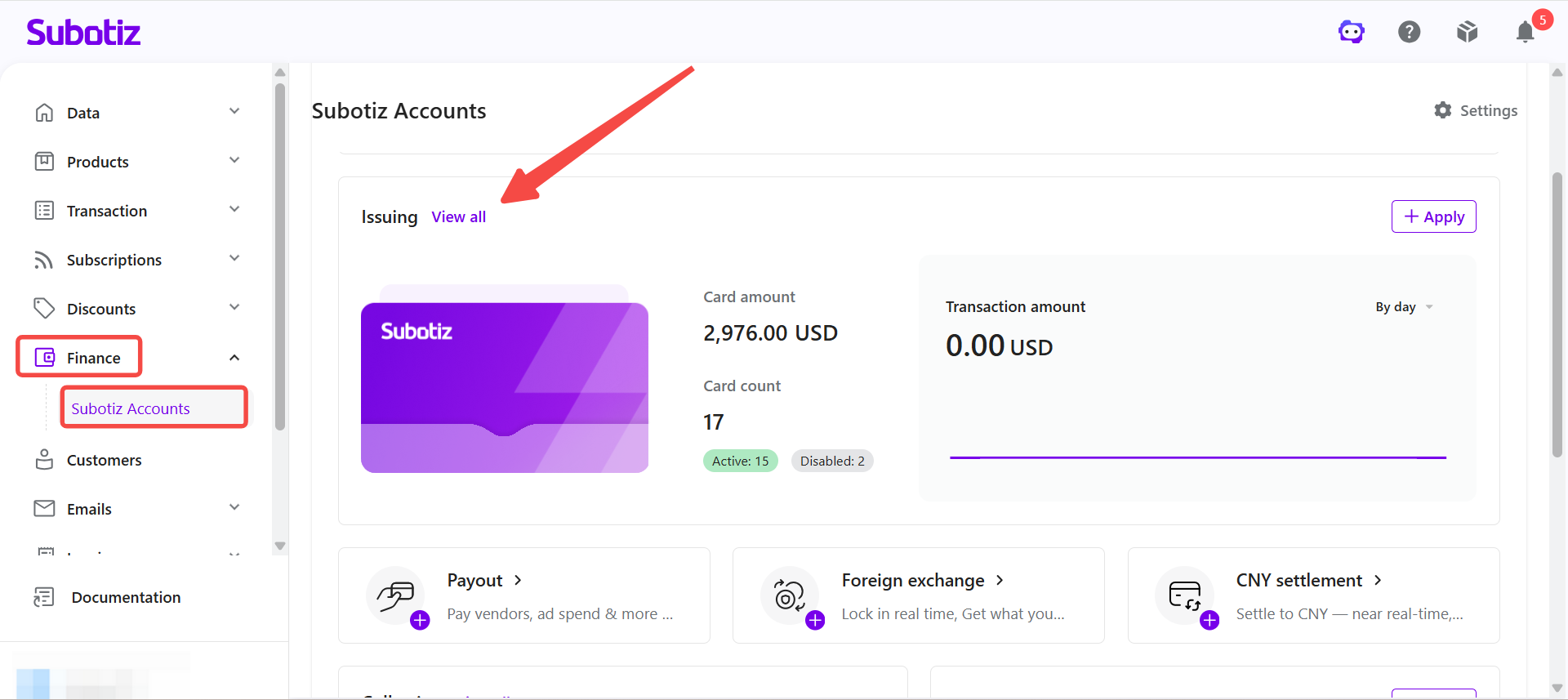
- Open Issuing: Log in to the Subotiz dashboard and go to Finance > Subotiz Accounts > Issuing, then click View All.
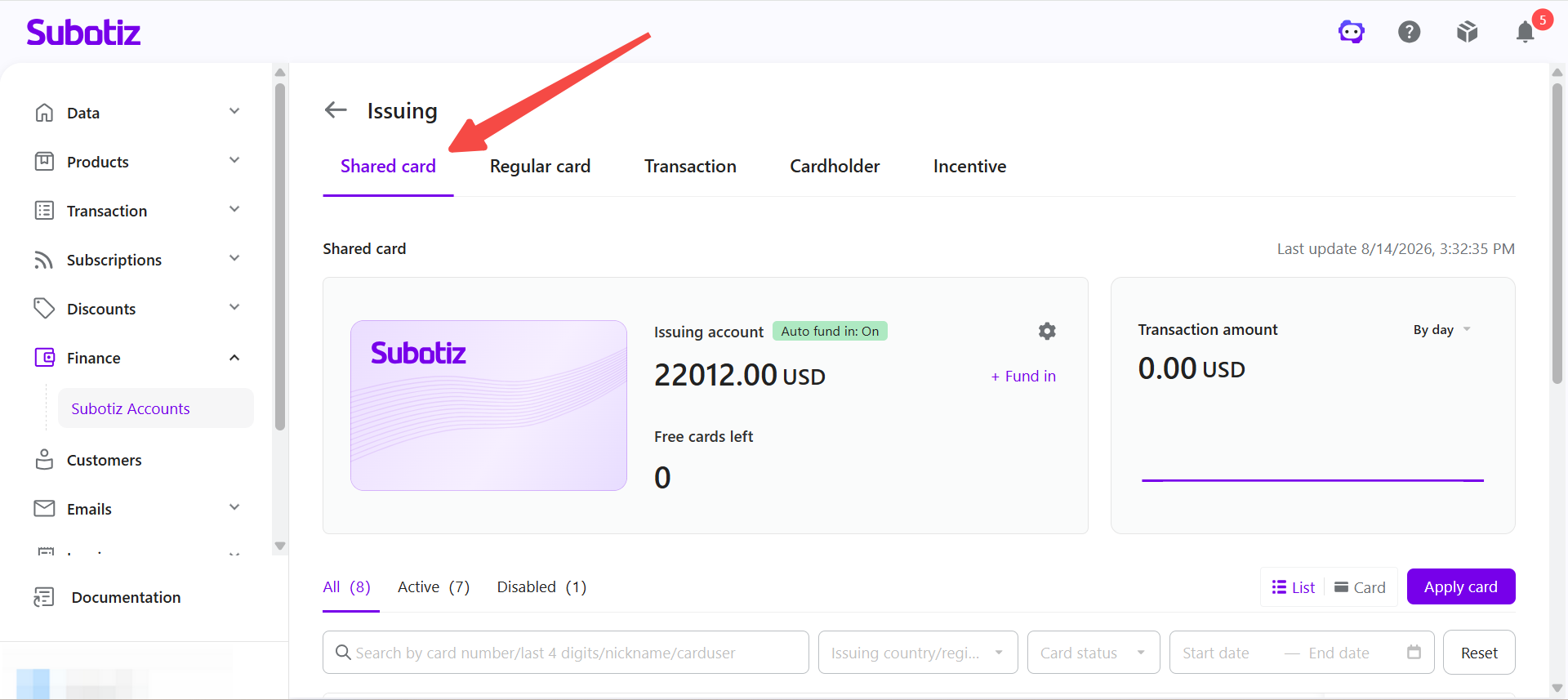
- Open Shared Cards: Click the Shared Cards tab to view all issued Shared Cards.
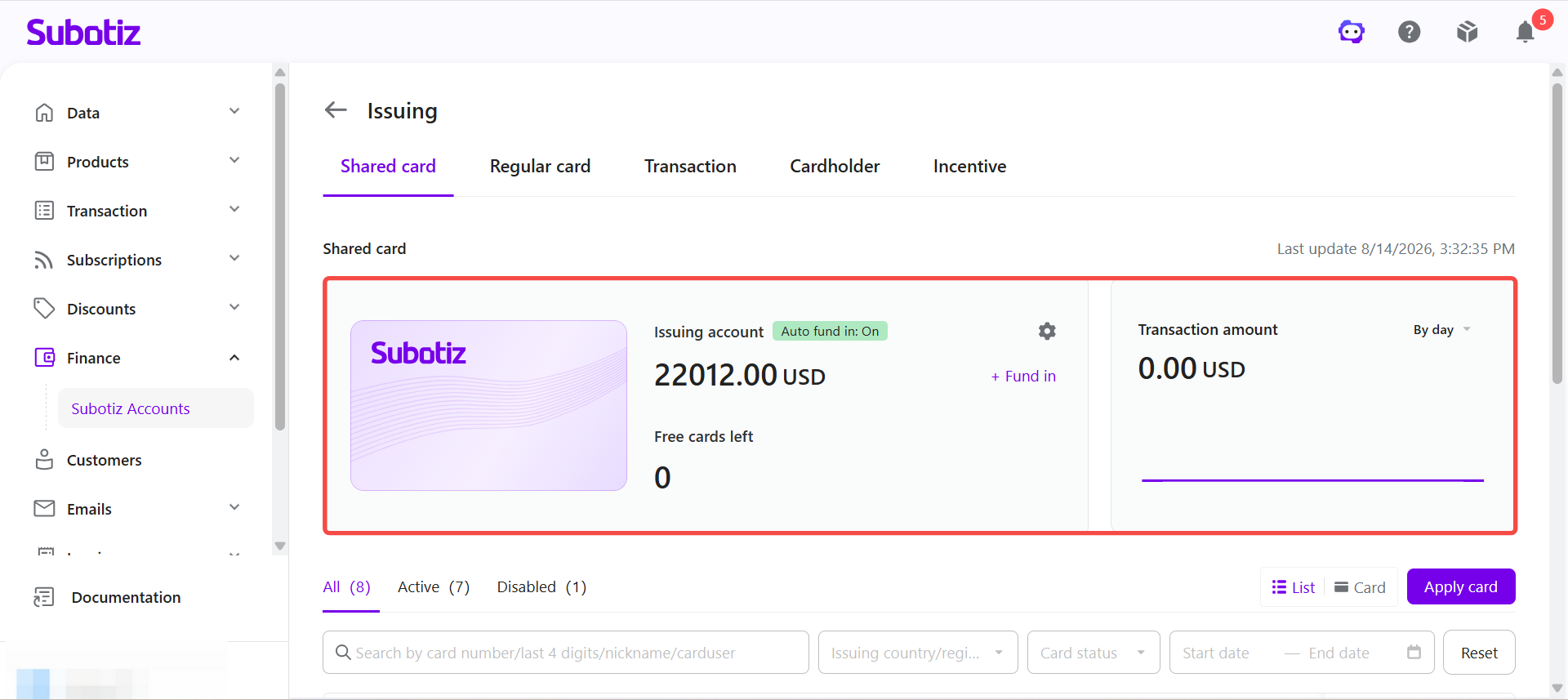
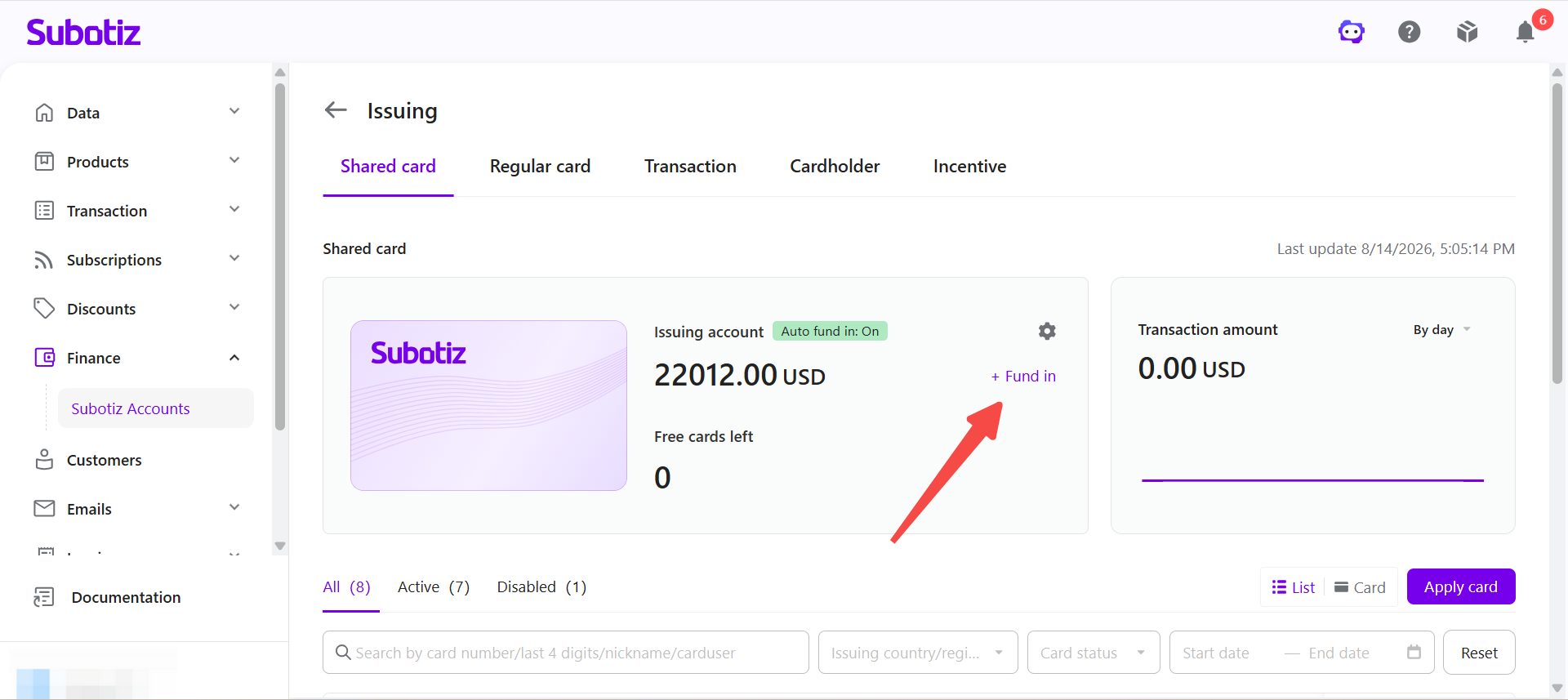
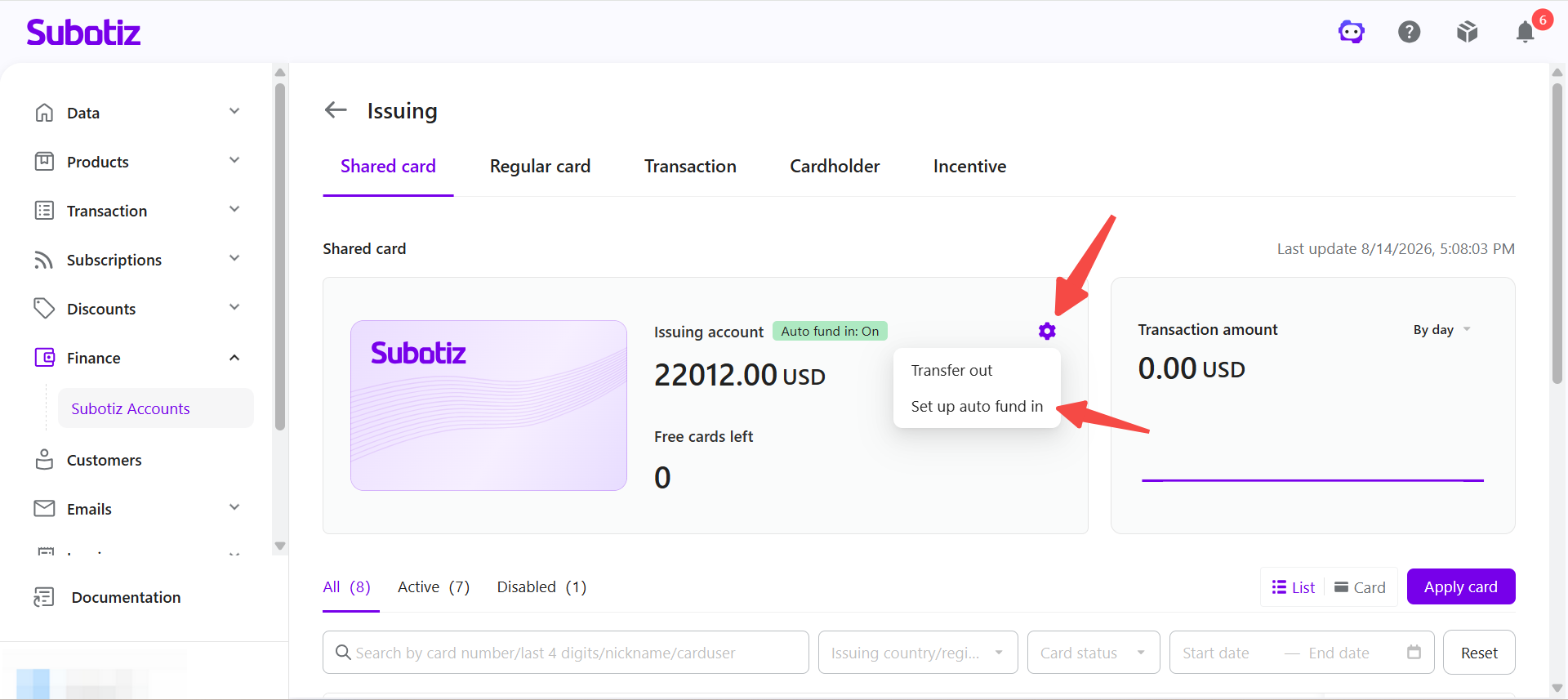
- Review the overview: The top of the page displays the Issuing Account available balance, transaction amount, and remaining free card quota, making it easy to review overall Shared Card fund usage.
Browsing Shared Cards
- View the card list: The Shared Cards page displays all issued Shared Cards by default. Each card shows the card number with the middle digits masked, nickname, cardholder, card status, spending limit, and issuing region.
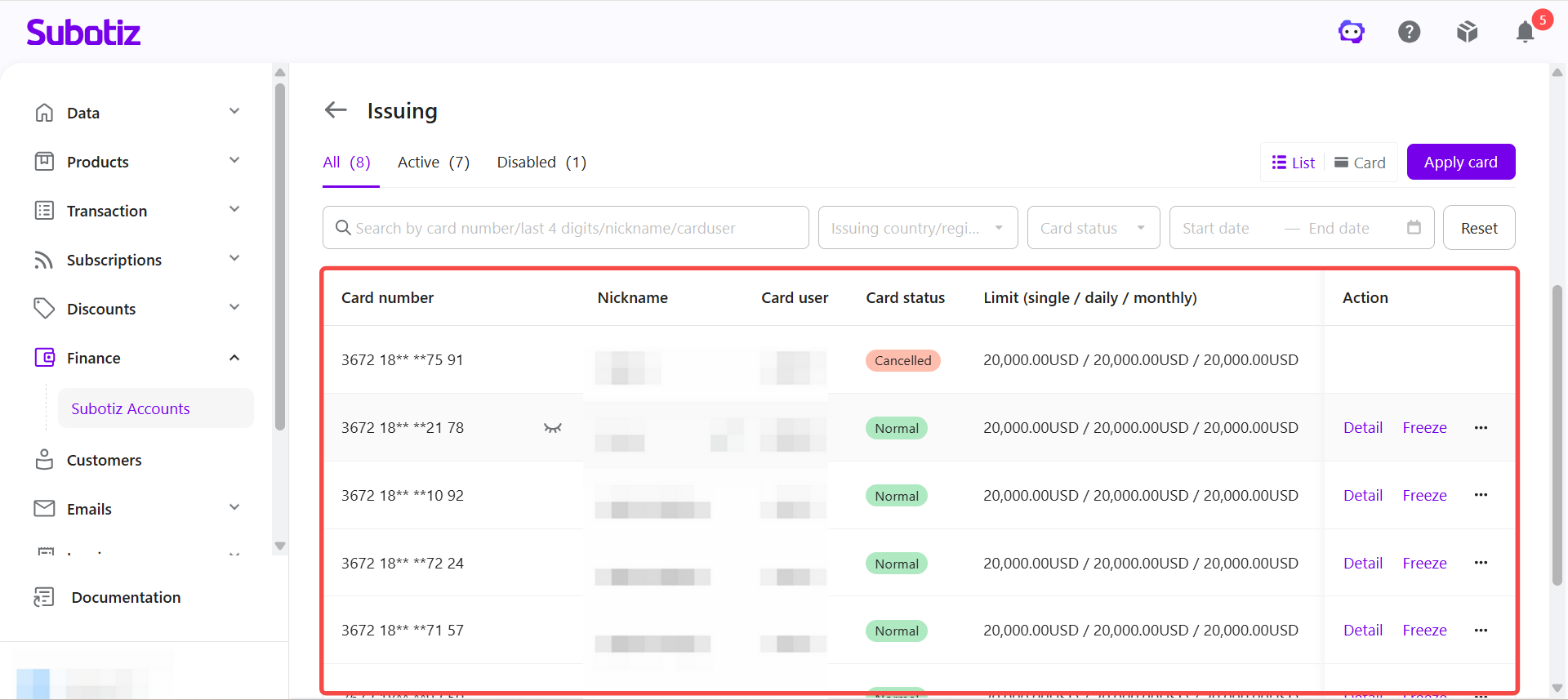
- View card details: Click Details to open the Shared Card details page.
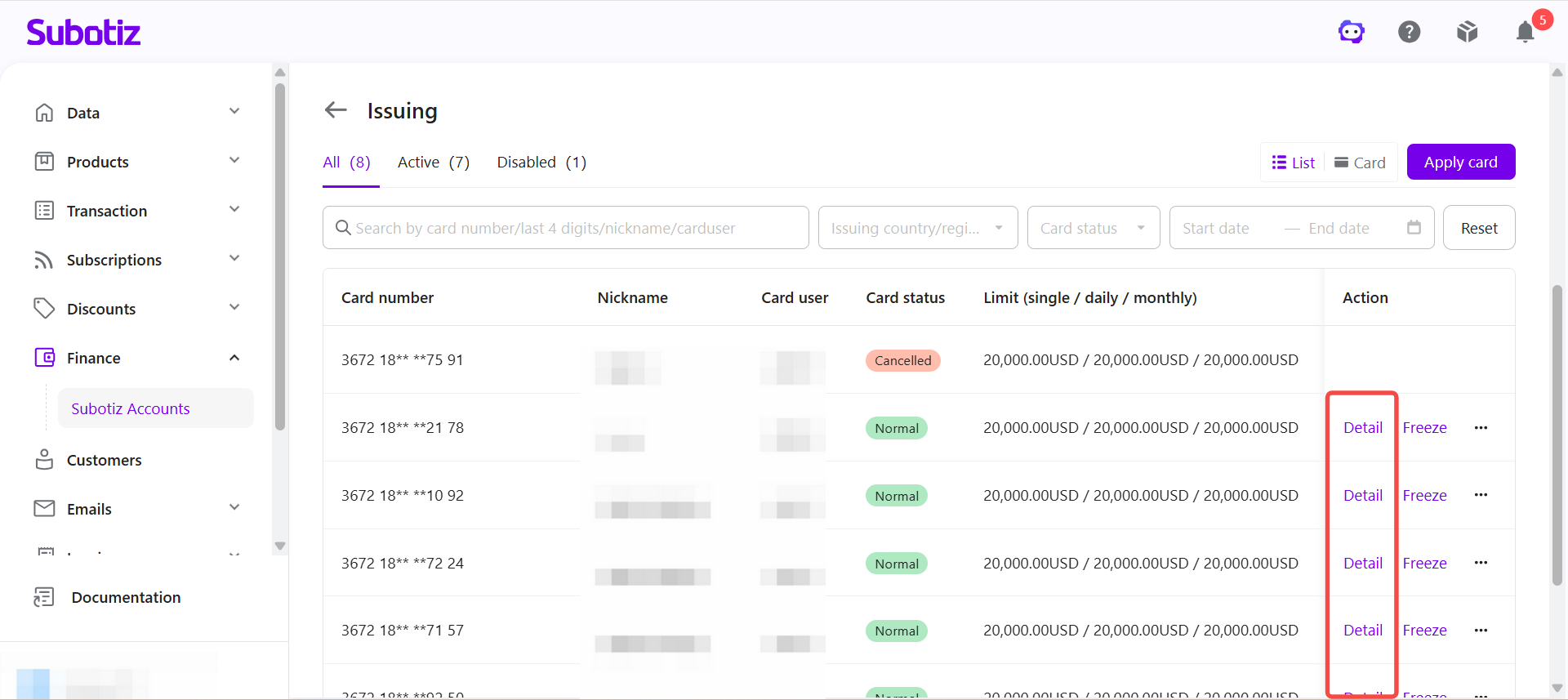
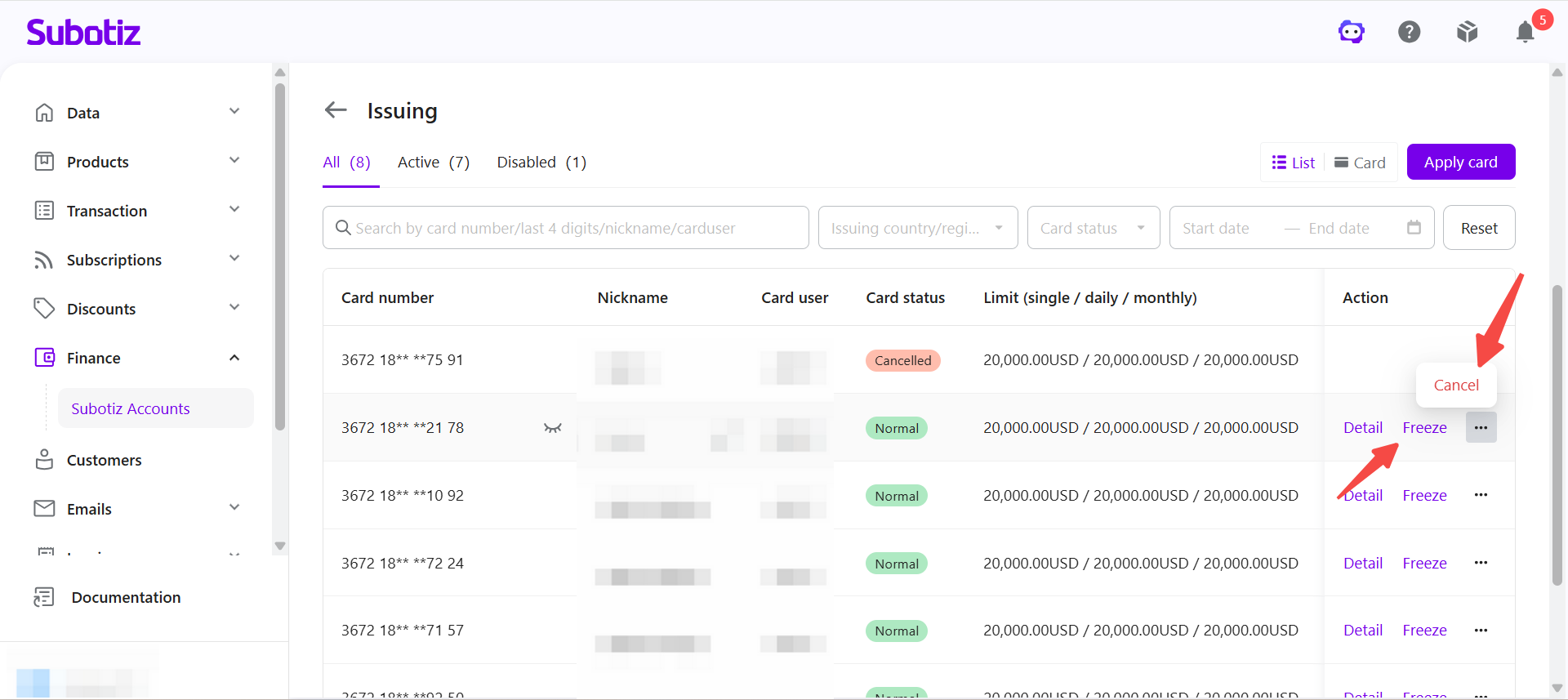
- Manage a card: Click Freeze or More to access the available management options for the selected Shared Card.
Switching Display Modes
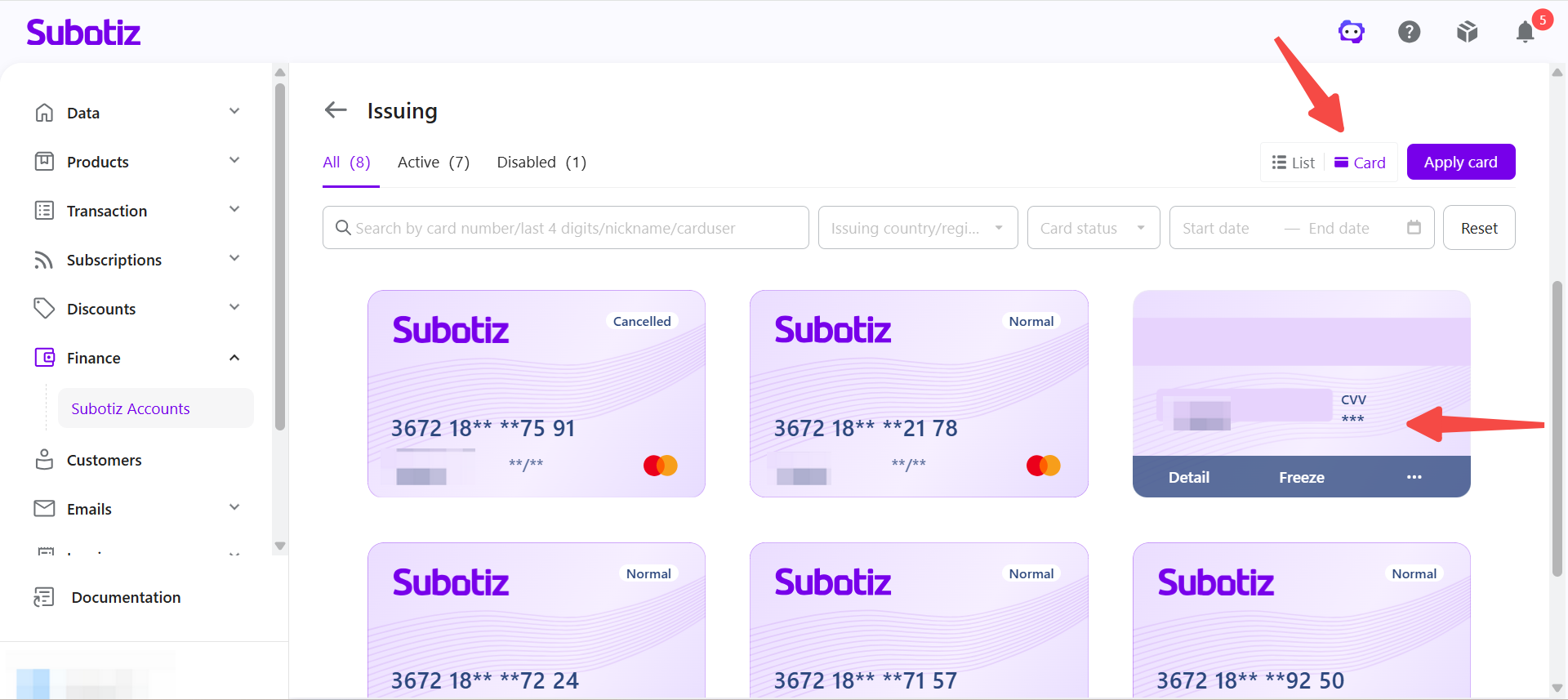
- Switch the display mode: Click List or Card in the upper-right corner of the page to change how Shared Cards are displayed.
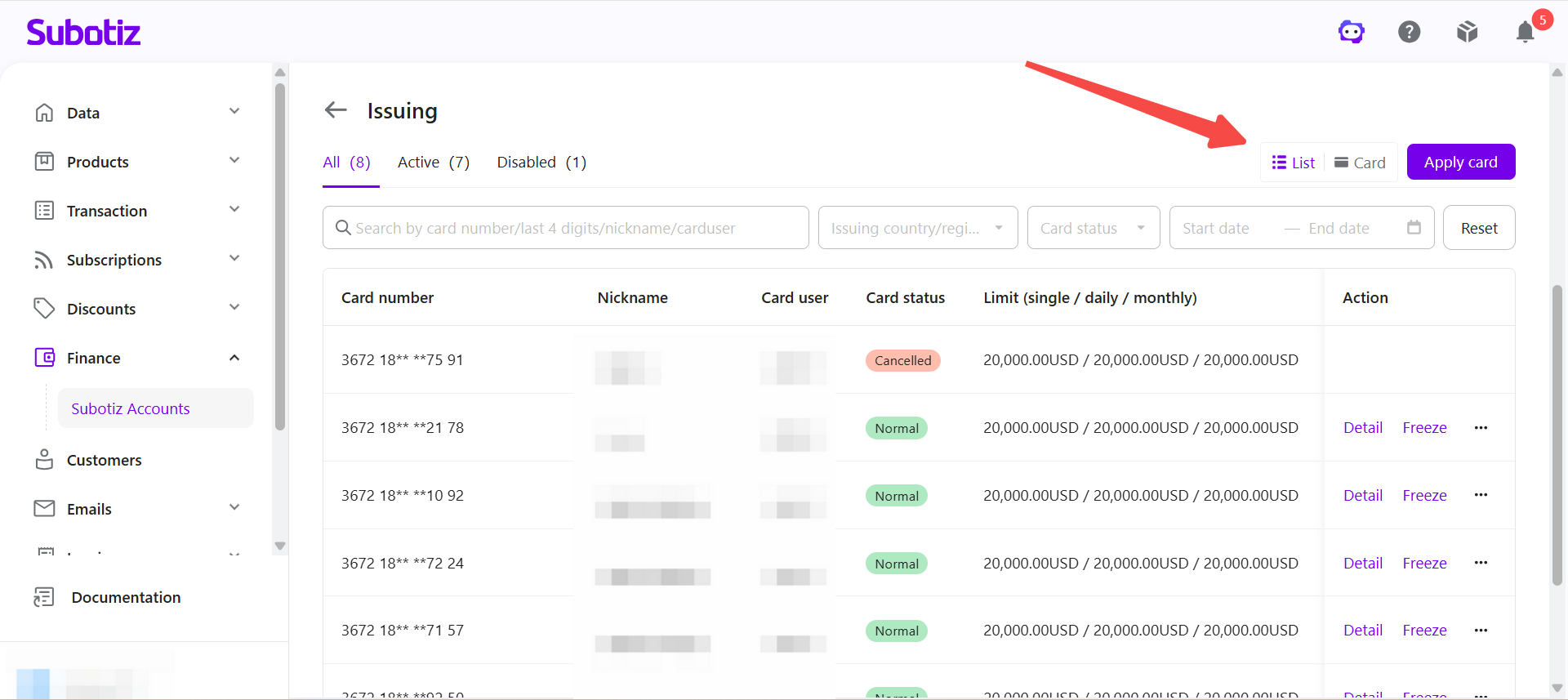
- Use List mode: Use List mode to review multiple Shared Cards and quickly access actions such as viewing details, freezing, or cancelling cards.
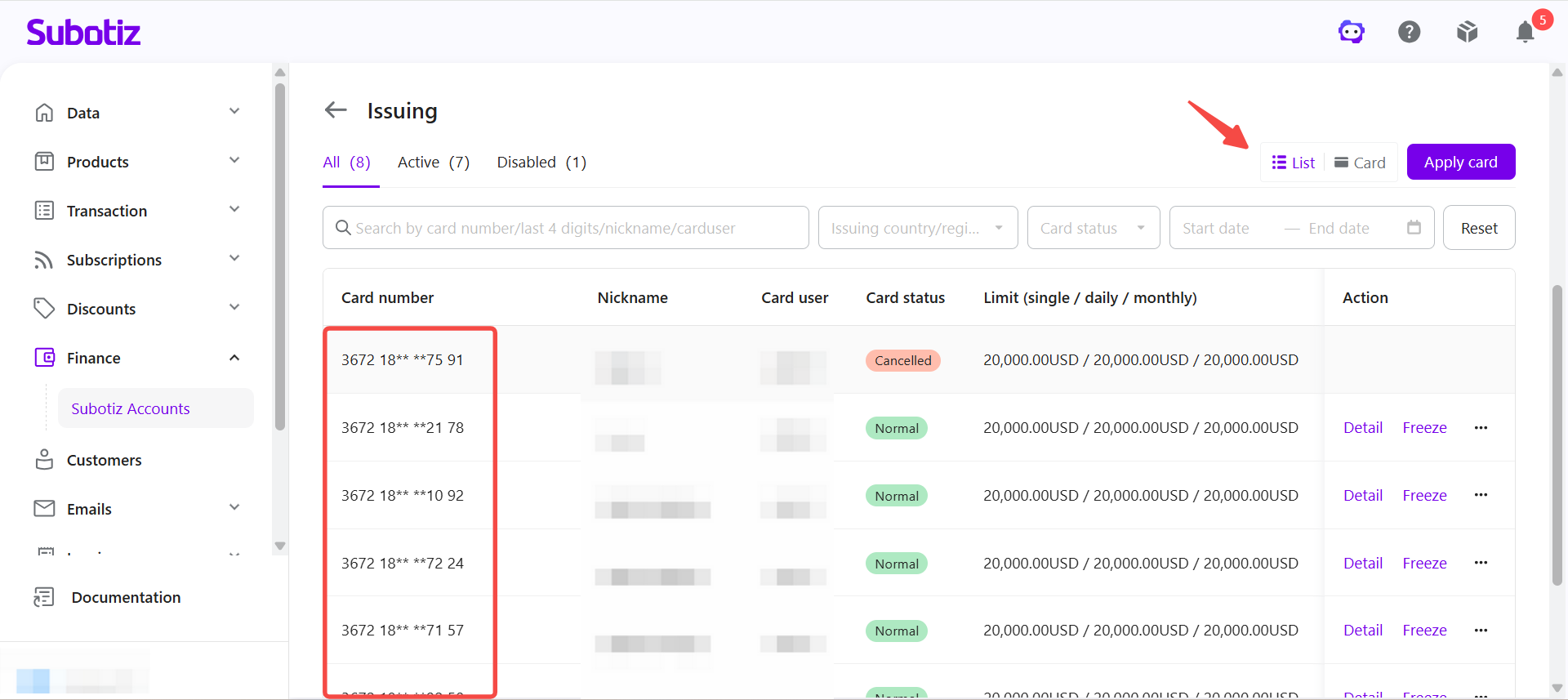
- Use Card mode: Use Card mode to view cards and their status at a glance and quickly access card details.
Searching and Filtering Shared Cards
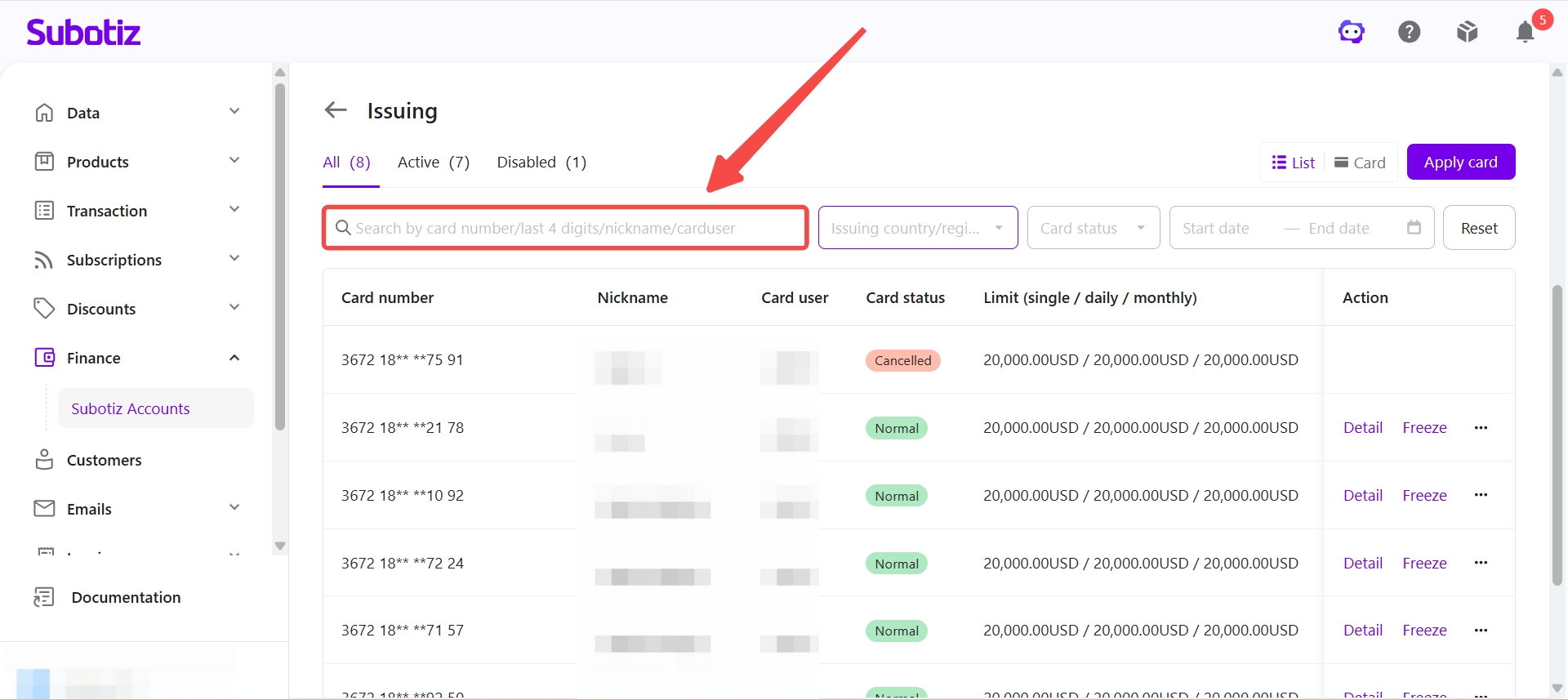
- Search for a Shared Card: Enter the last four digits of the card number, card nickname, or cardholder name to find a specific Shared Card.
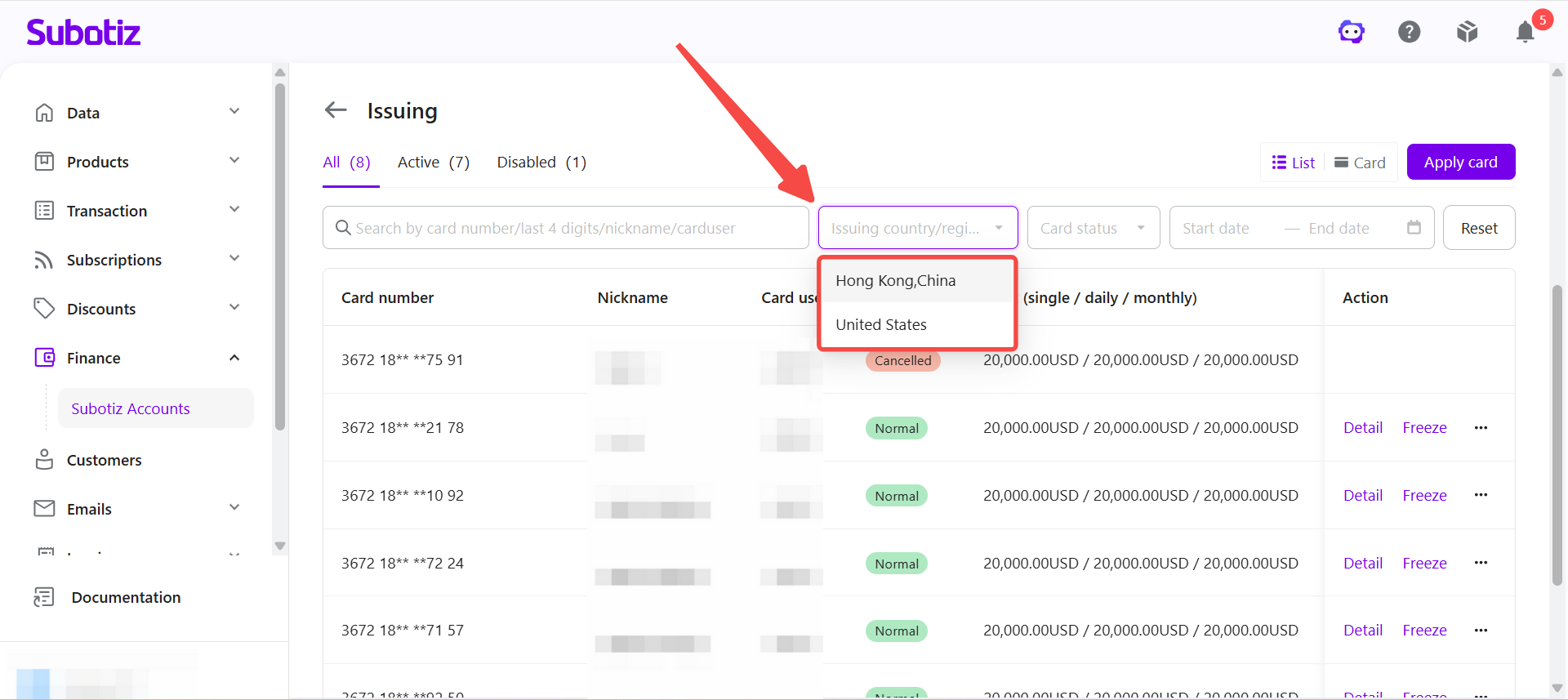
- Filter by issuing region: Use the Issuing Region filter to display Shared Cards issued in a specific region.
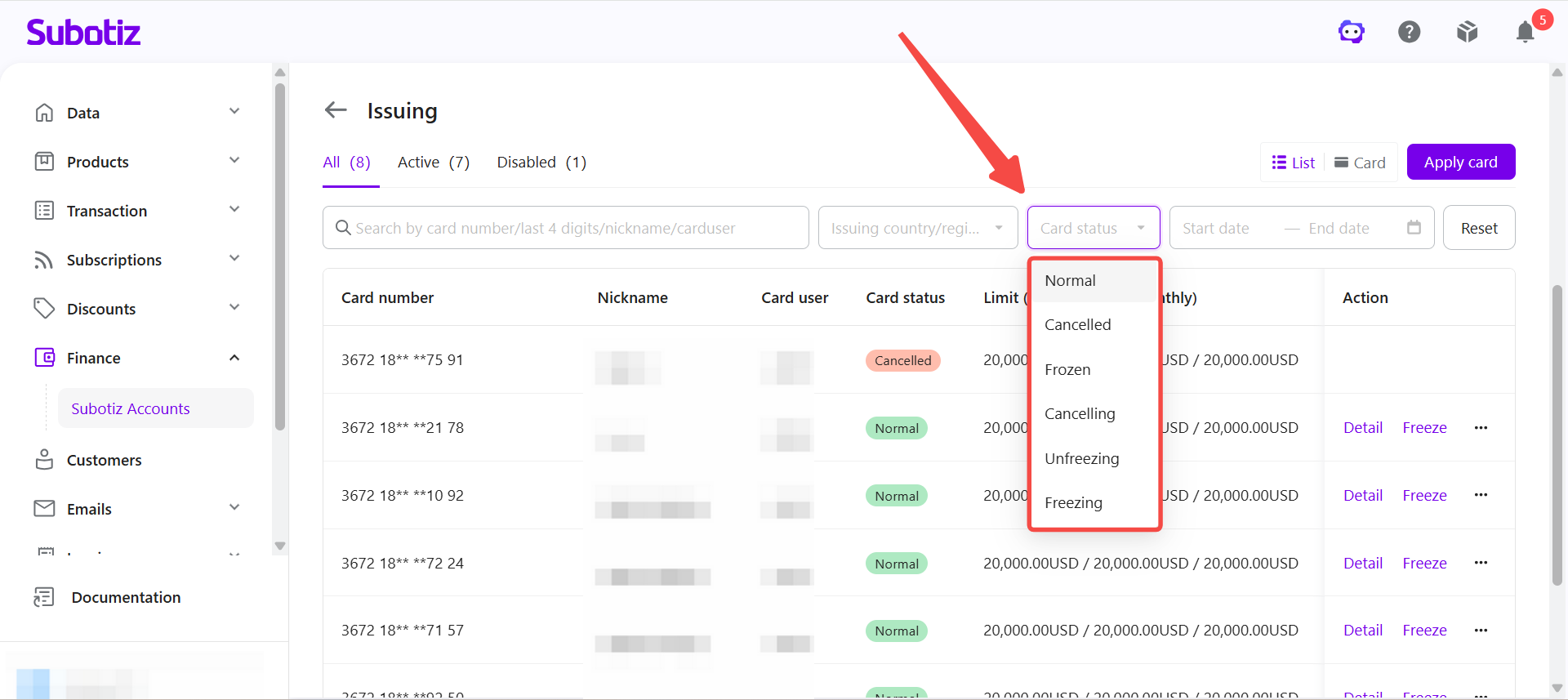
- Filter by card status: Use the Card Status filter to display Shared Cards with a specific status.Card status definitions:
- Normal: The card is available for online payments.
- Freezing: The freeze request is being processed. The card status updates after processing is complete.
- Frozen: The card is frozen and cannot be used for online payments.
- Unfreezing: The unfreeze request is being processed. The card can be used again after the request is complete.
- Cancelling: The card cancellation request is being processed. The card status updates after processing is complete.
- Cancelled: The card has been permanently cancelled and cannot be restored or used for payments.
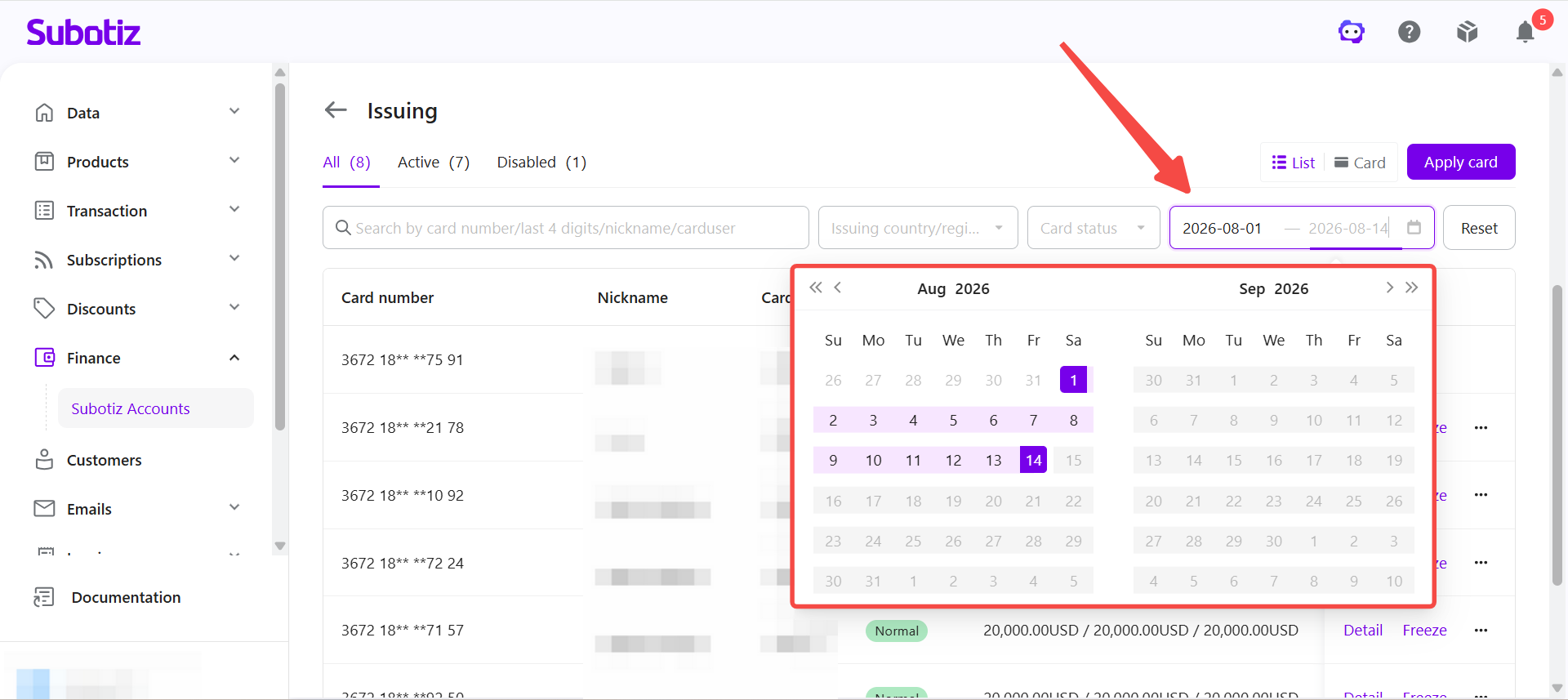
- Filter by creation date: Use Start Date and End Date to display Shared Cards created within a specific date range.
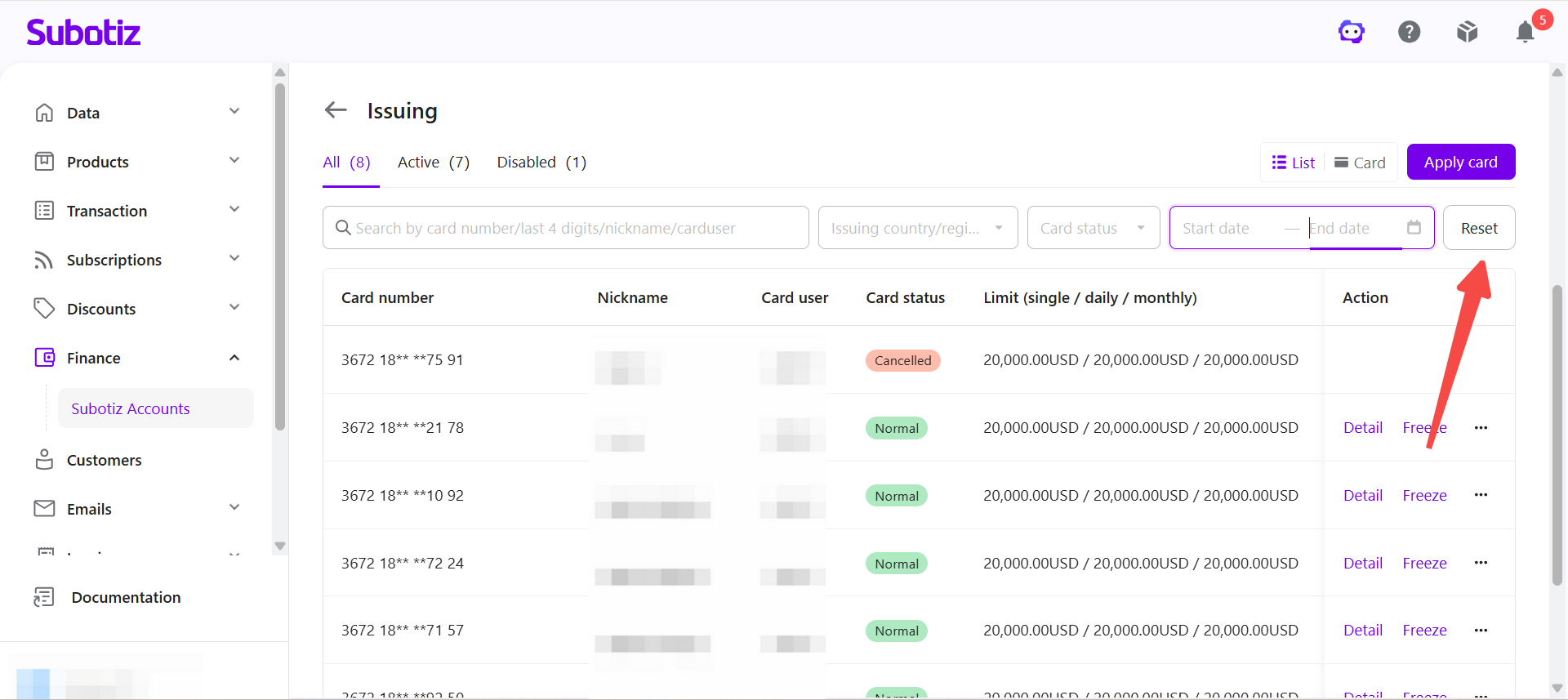
- Reset the filters: Click Reset to clear all applied filters.
Viewing Card Details
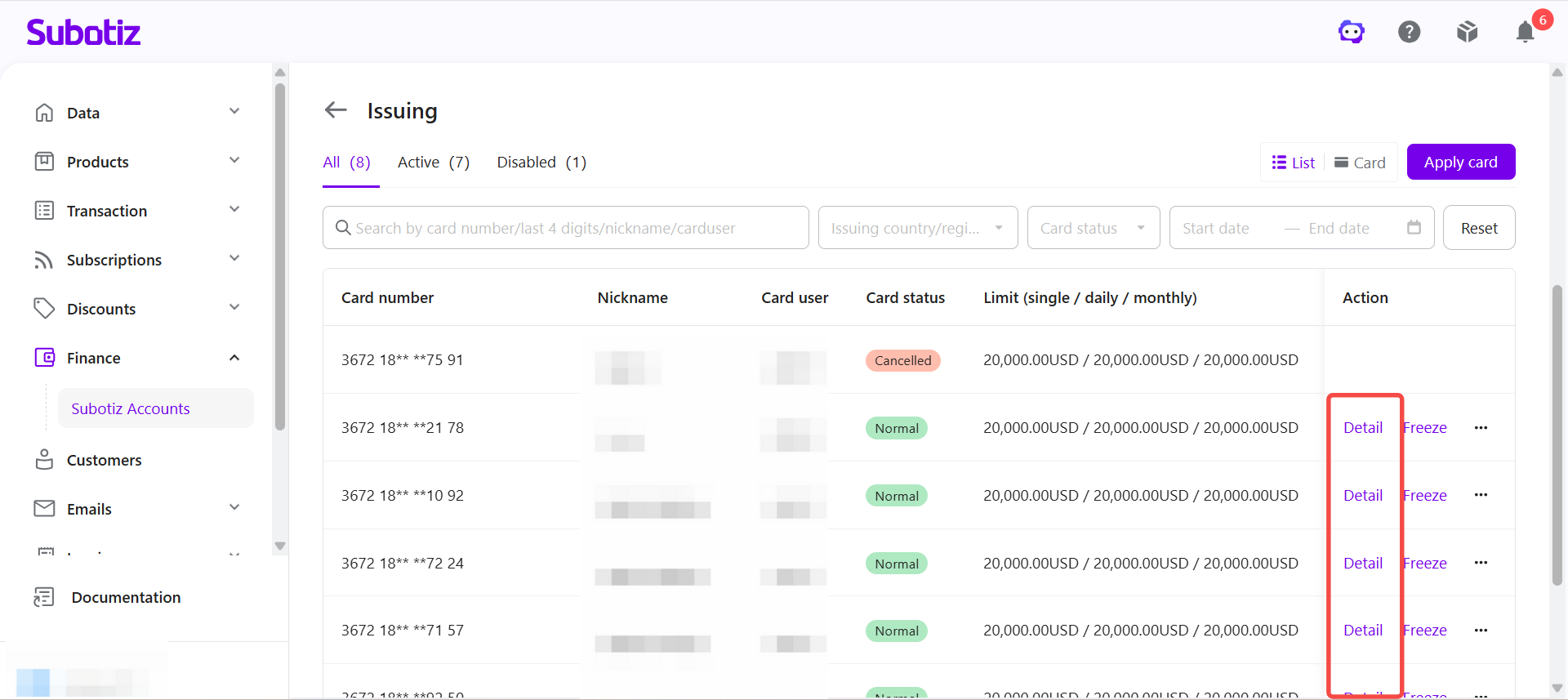
- Open card details: Click Details for a Shared Card to view its information and management options.
- Review card information: The card details page displays the card number, cardholder, expiration date, CVV, card ID, application date, issuing region, billing address, 3DS notification email, and spending limits.
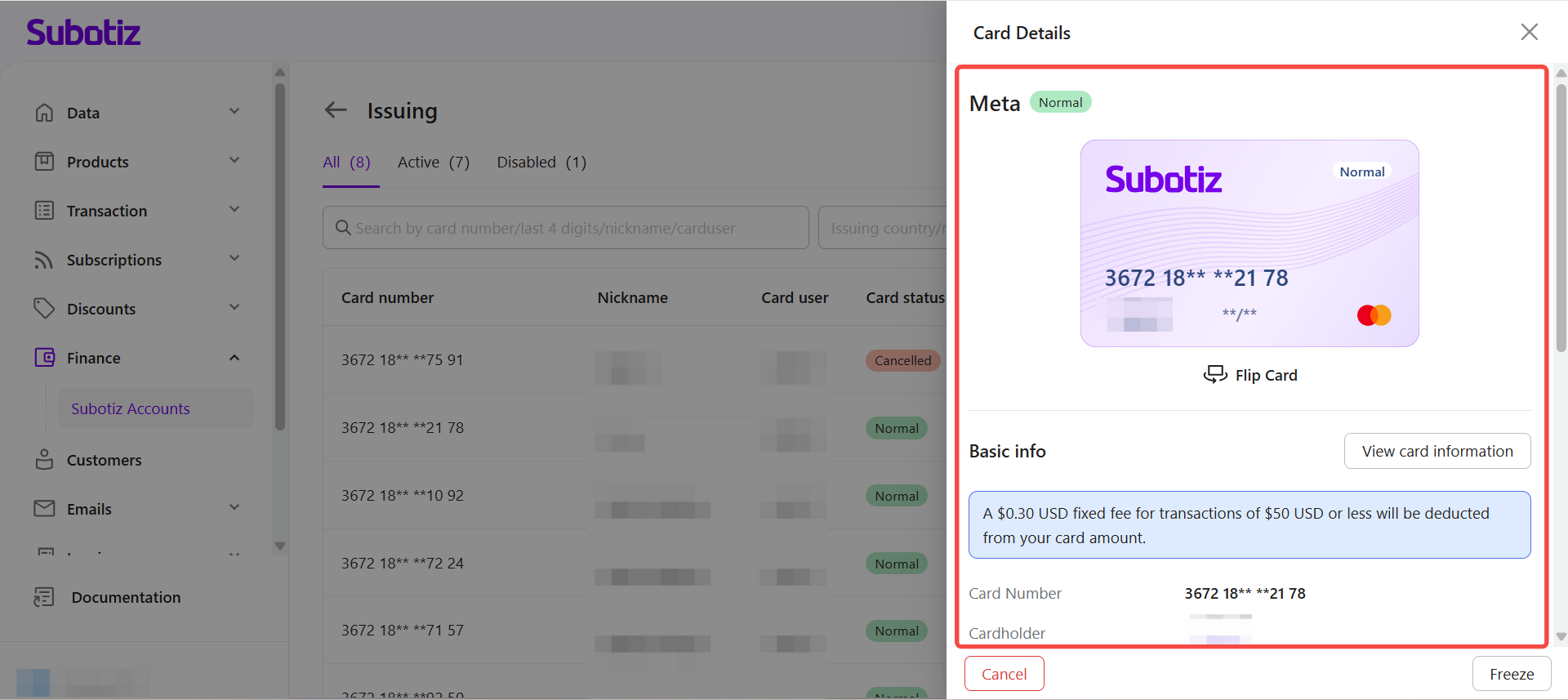
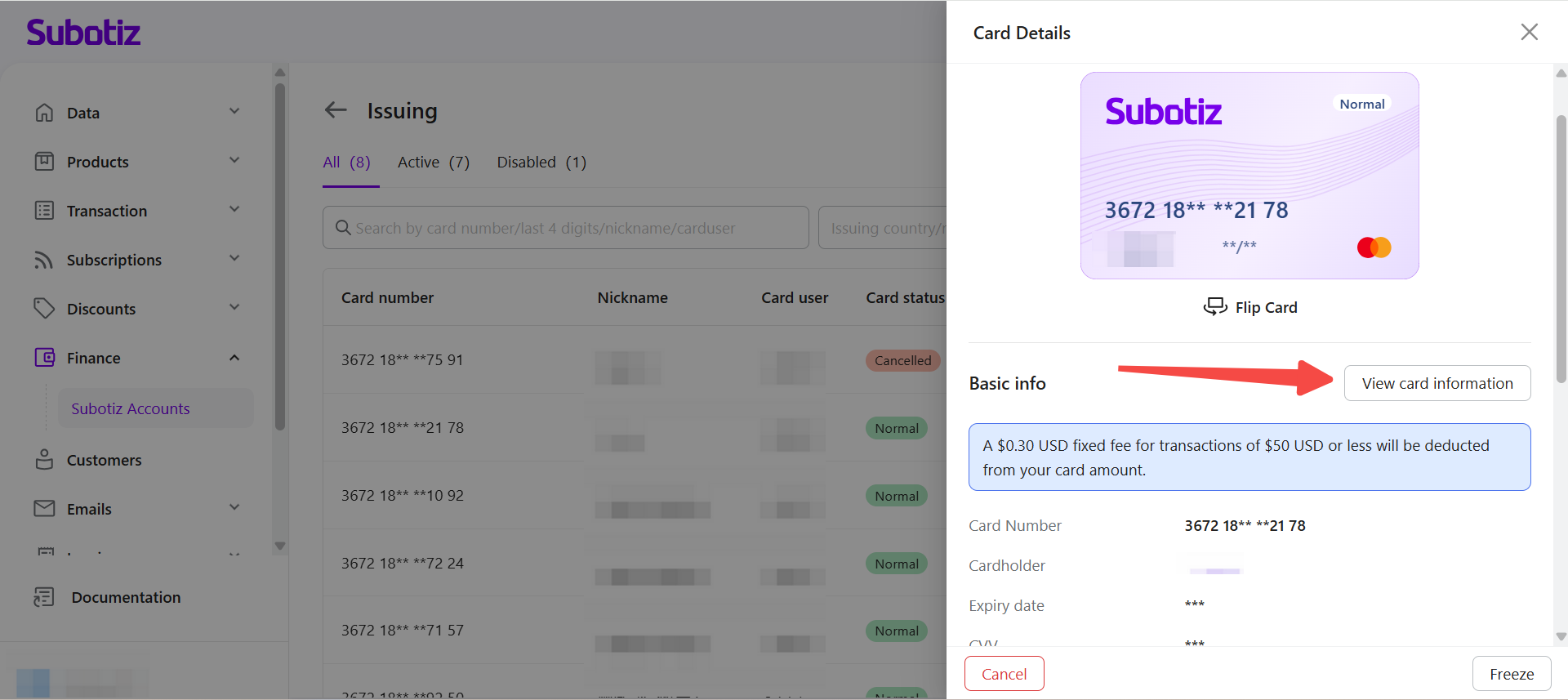
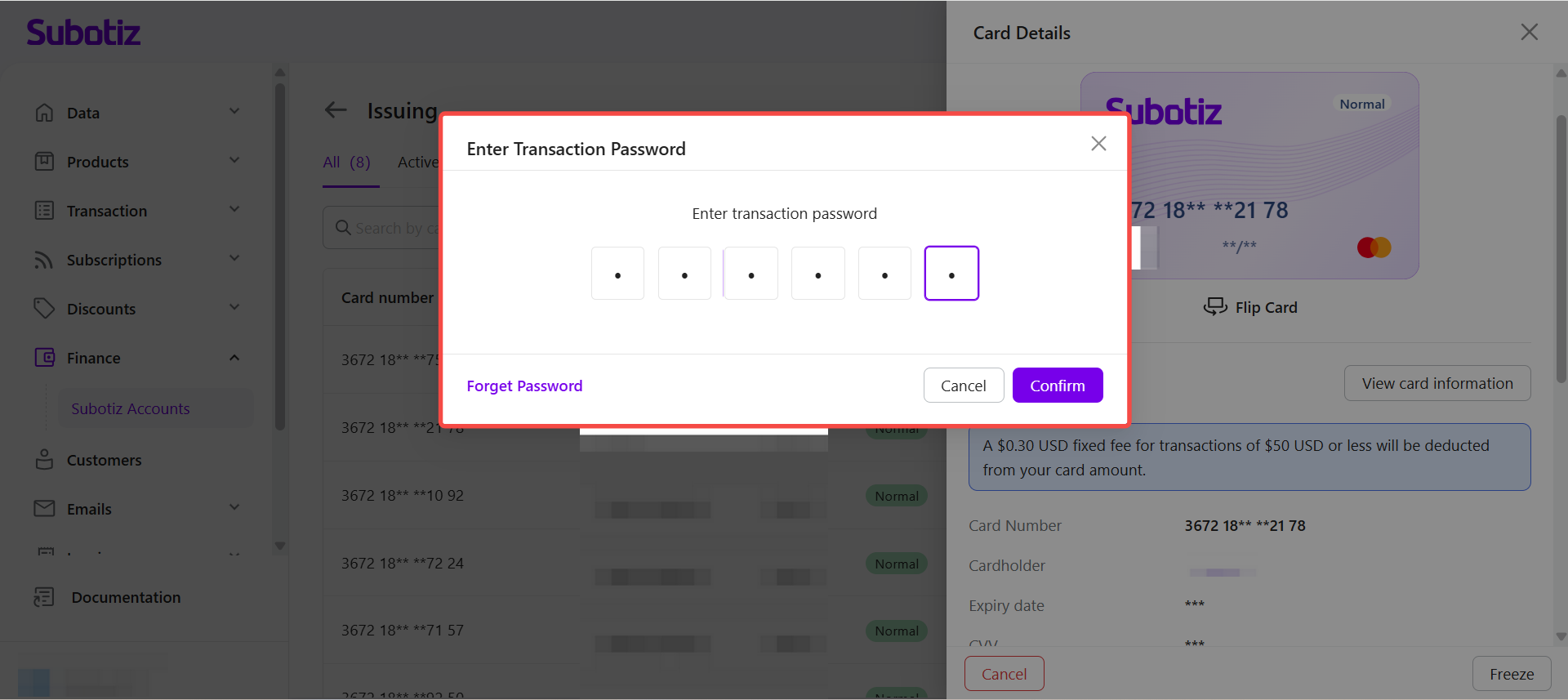
- View full card information: Click View Card Information and enter the transaction password to view the full card number, expiration date, and CVV. To protect sensitive card and account information, the transaction password is required each time these details are accessed.
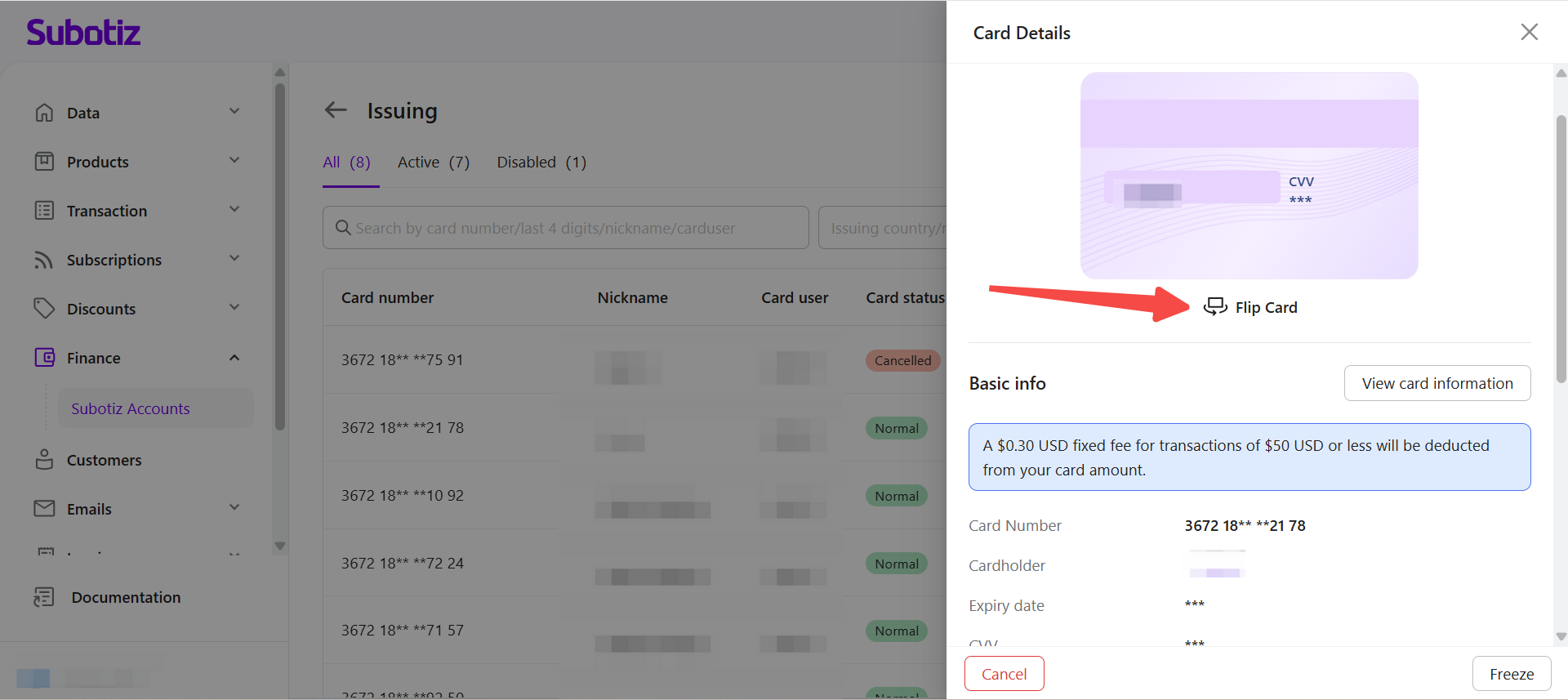
- Flip the card: Click Flip Card to view the back of the card.
- Manage the transaction password: To set or change the transaction password, refer to Subotiz Accounts | Payment Settings.
Managing the Notification Email
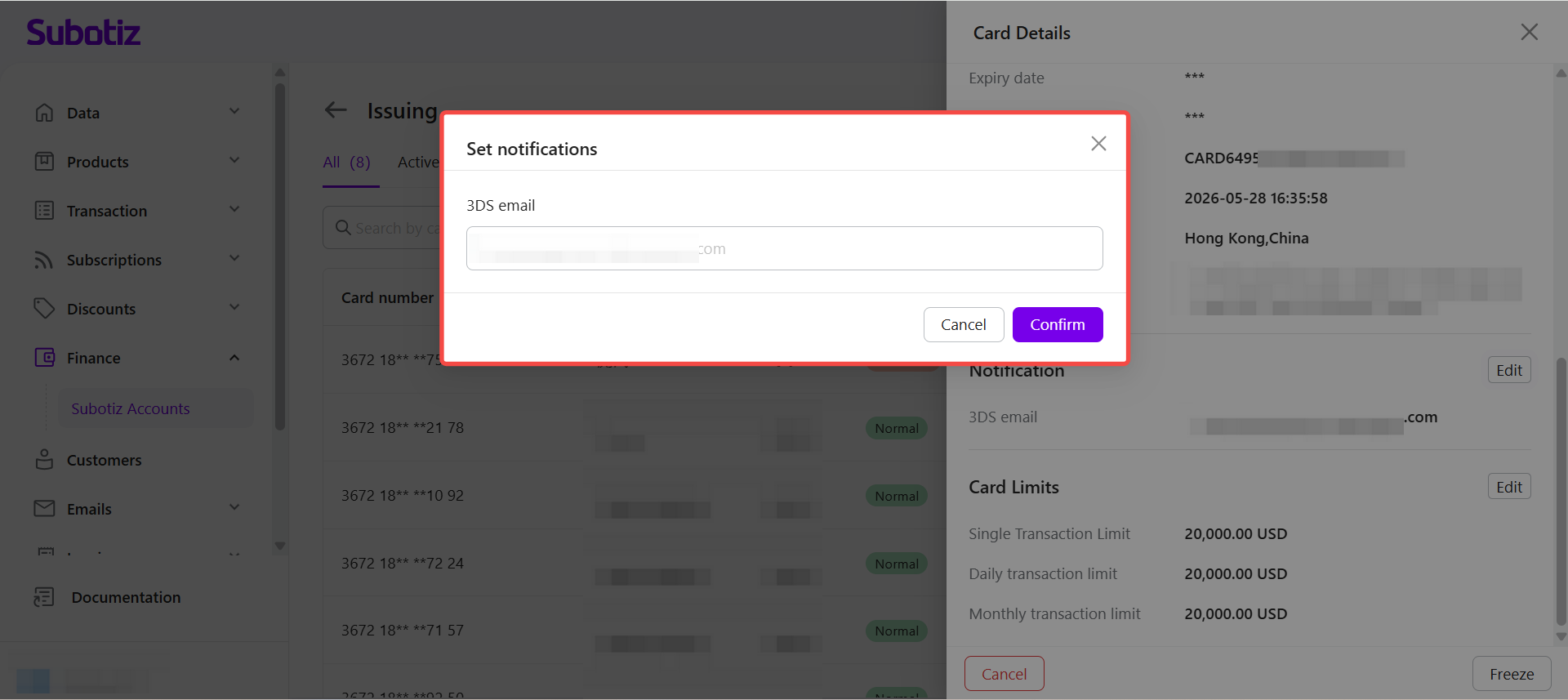
- View the notification email: The card details page displays the email address currently used to receive 3D Secure (3DS) verification emails.
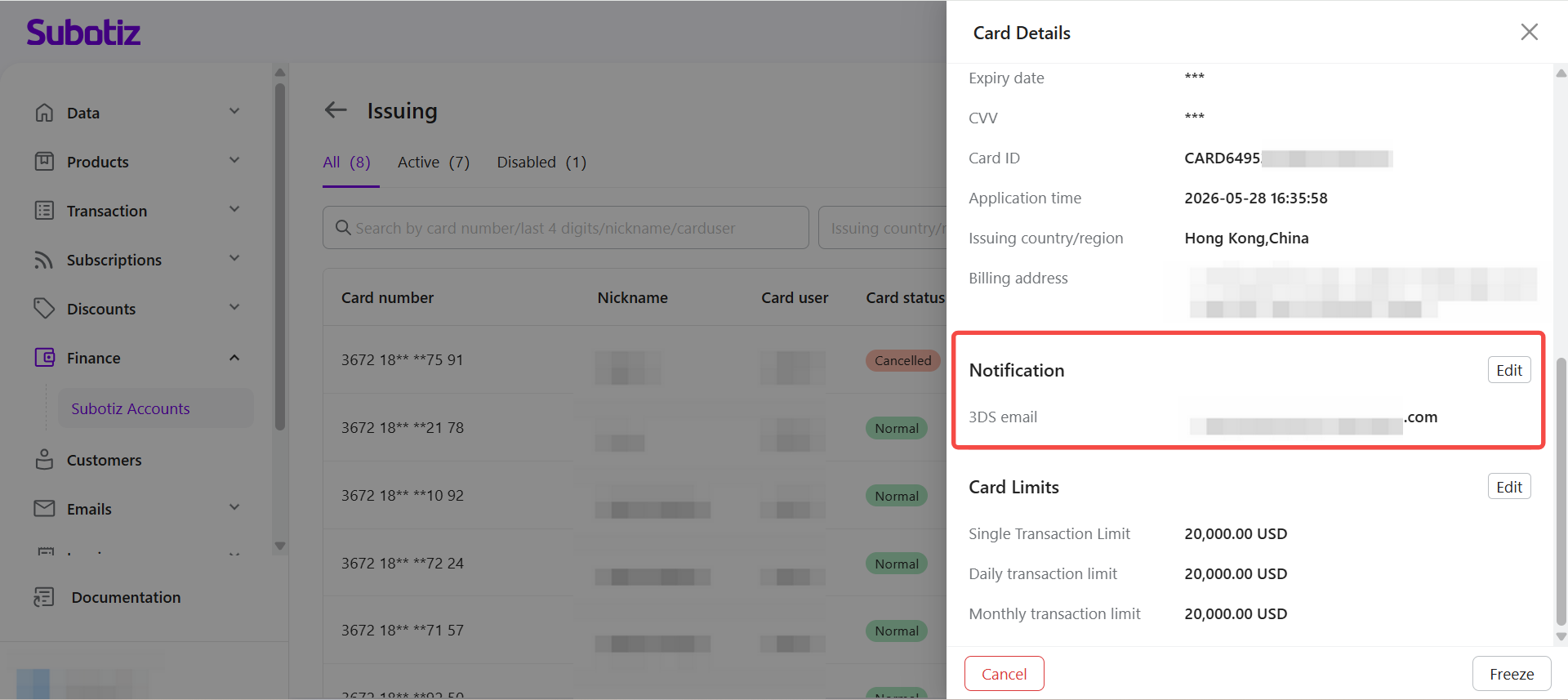
- Update the notification email: Click Edit, enter a new notification email address, and save the changes. When a transaction requires 3D Secure (3DS) verification, the system sends the verification code to this email address.
Setting Spending Limits
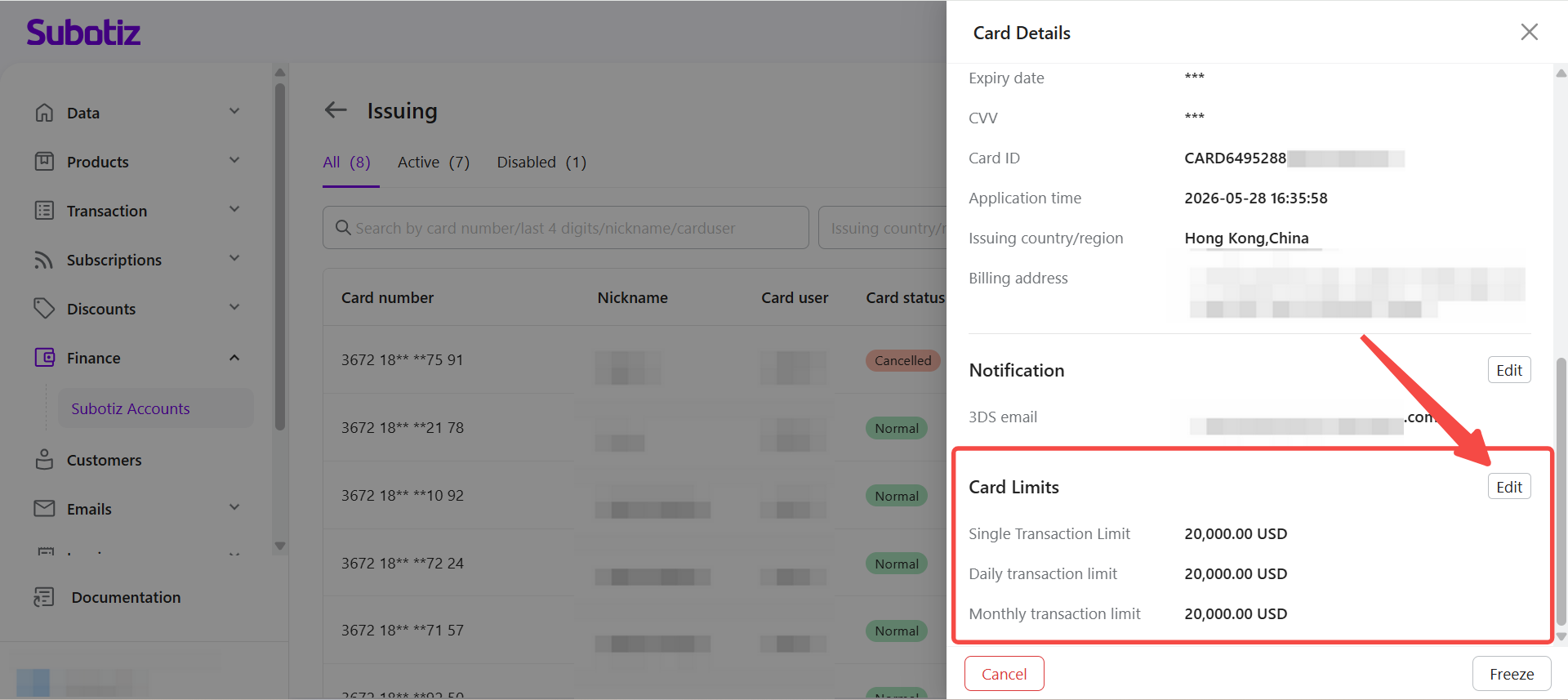
- Open the limit settings: Click Edit.
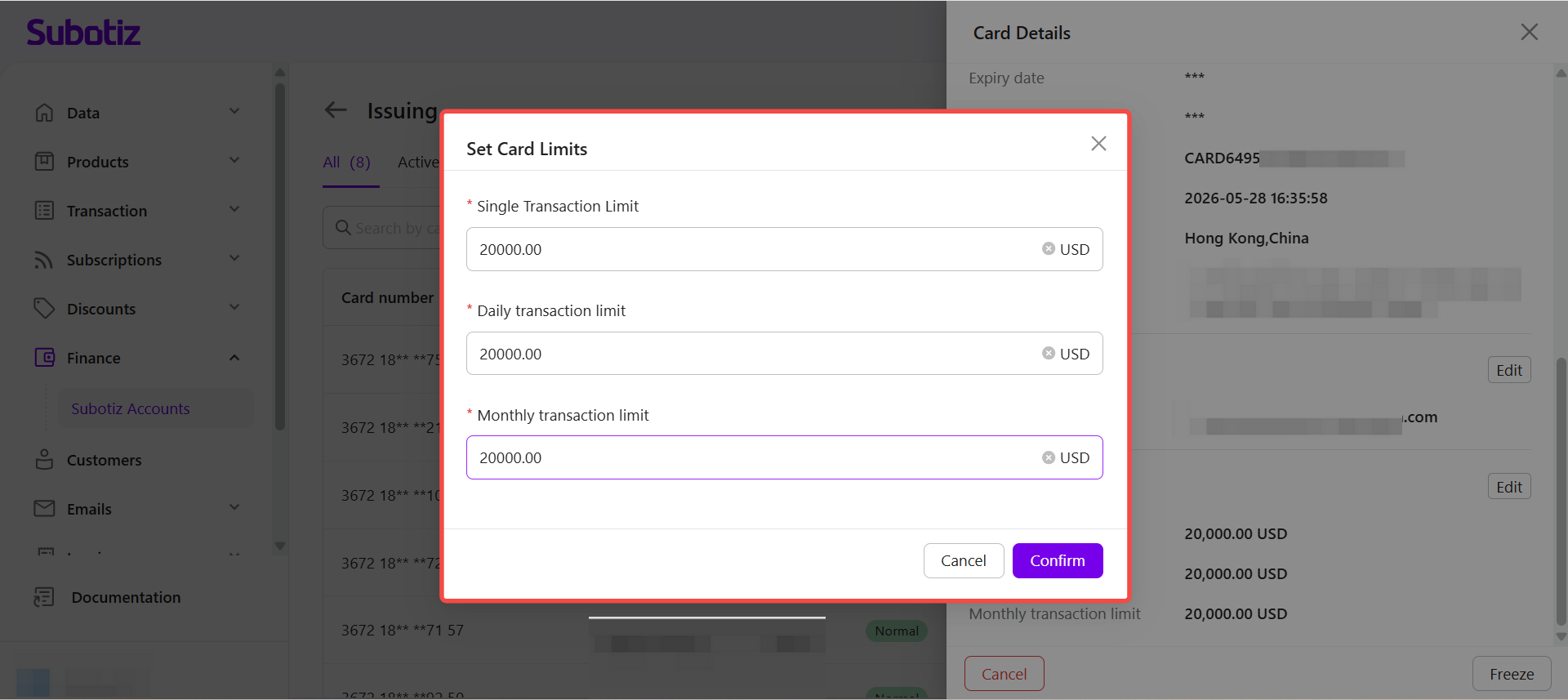
- Set spending limits: Set the per-transaction, daily, and monthly spending limits based on the intended use of the card.
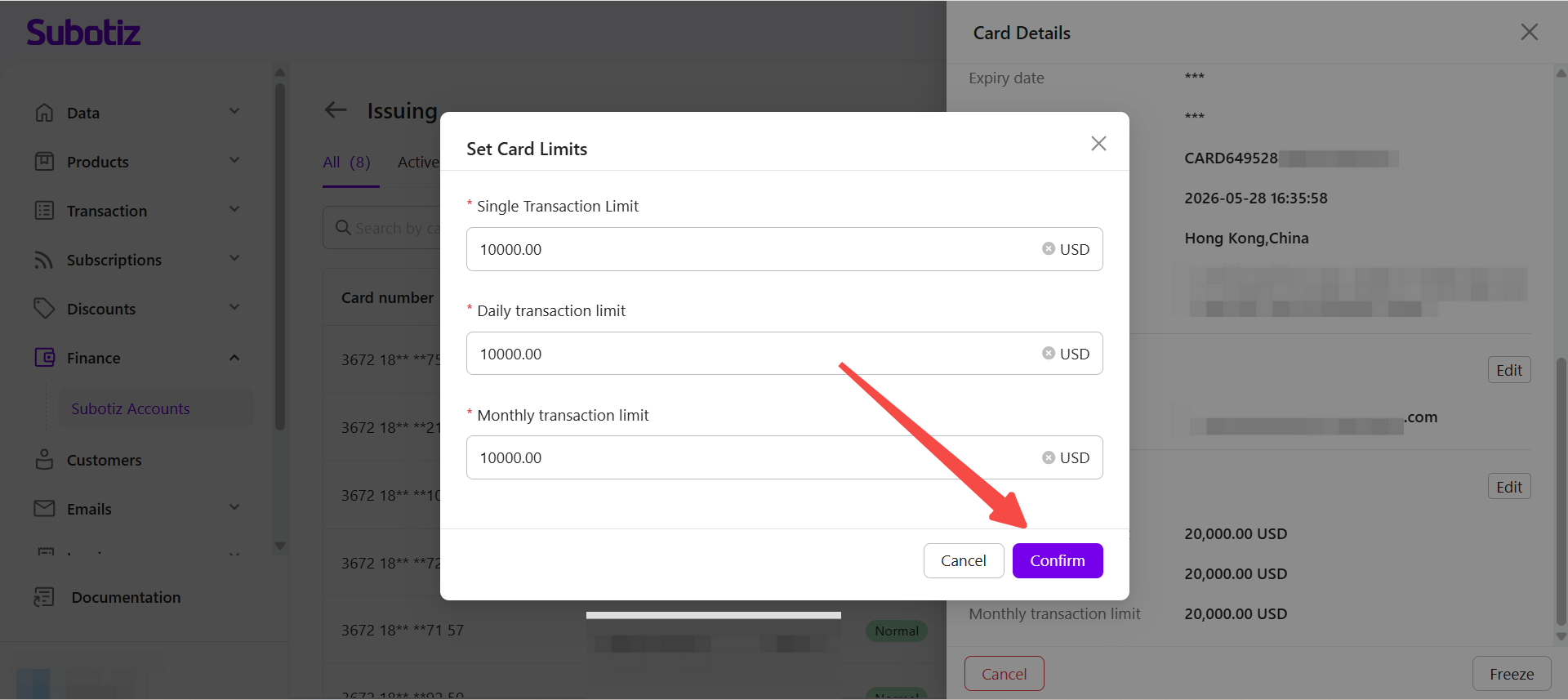
- Save the limits: Review the spending limits, then click Confirm to save the changes.
Notes:
Managing the Issuing Account
Note: The Issuing Account provides a shared funding source for all Shared Cards. Merchants can use Top Up, Transfer Out, and Auto Fund to manage the Issuing Account balance.
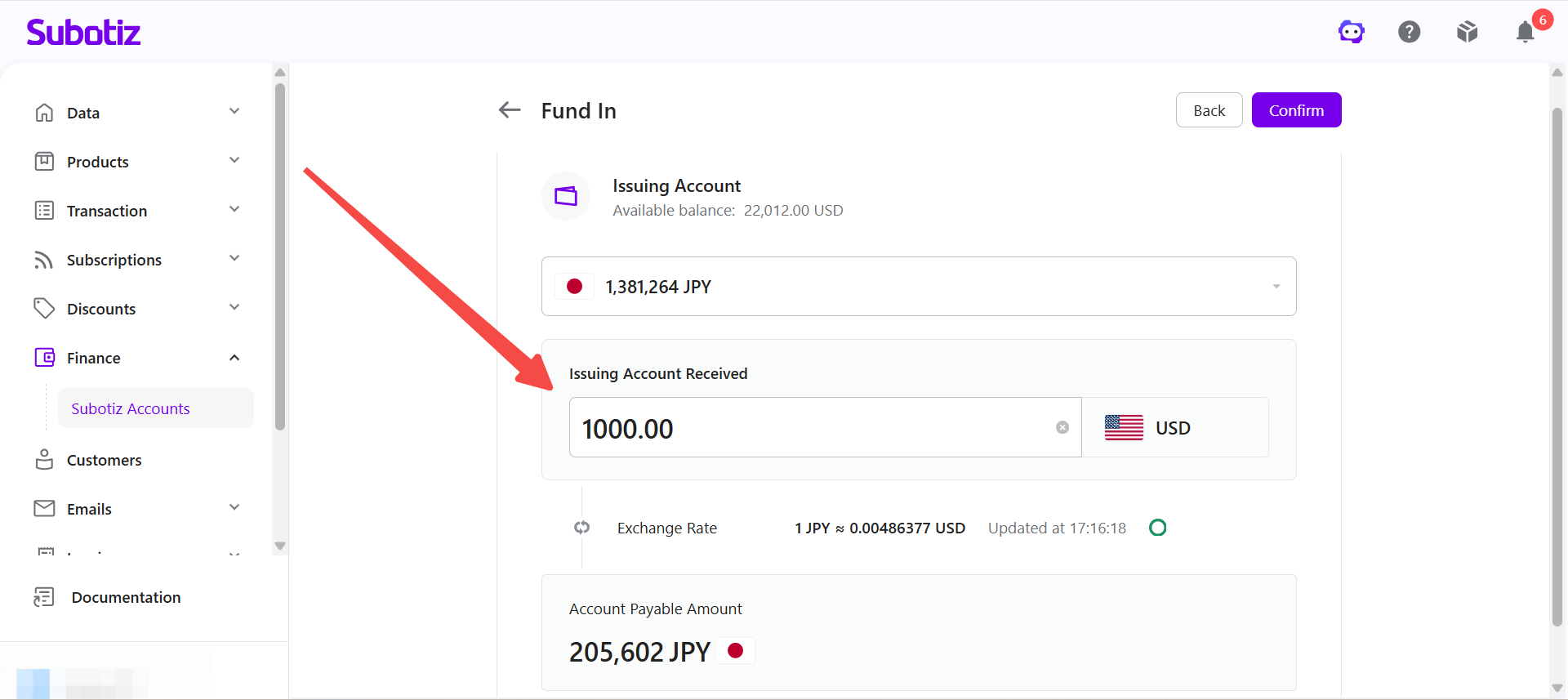
- Top up the Issuing Account: Click Fund in at the top of the page, enter the top-up amount, and select the Global Account to use for payment. If the Global Account currency differs from the Issuing Account currency, the system automatically converts the funds using the real-time exchange rate and displays the applicable exchange rate and amount due.
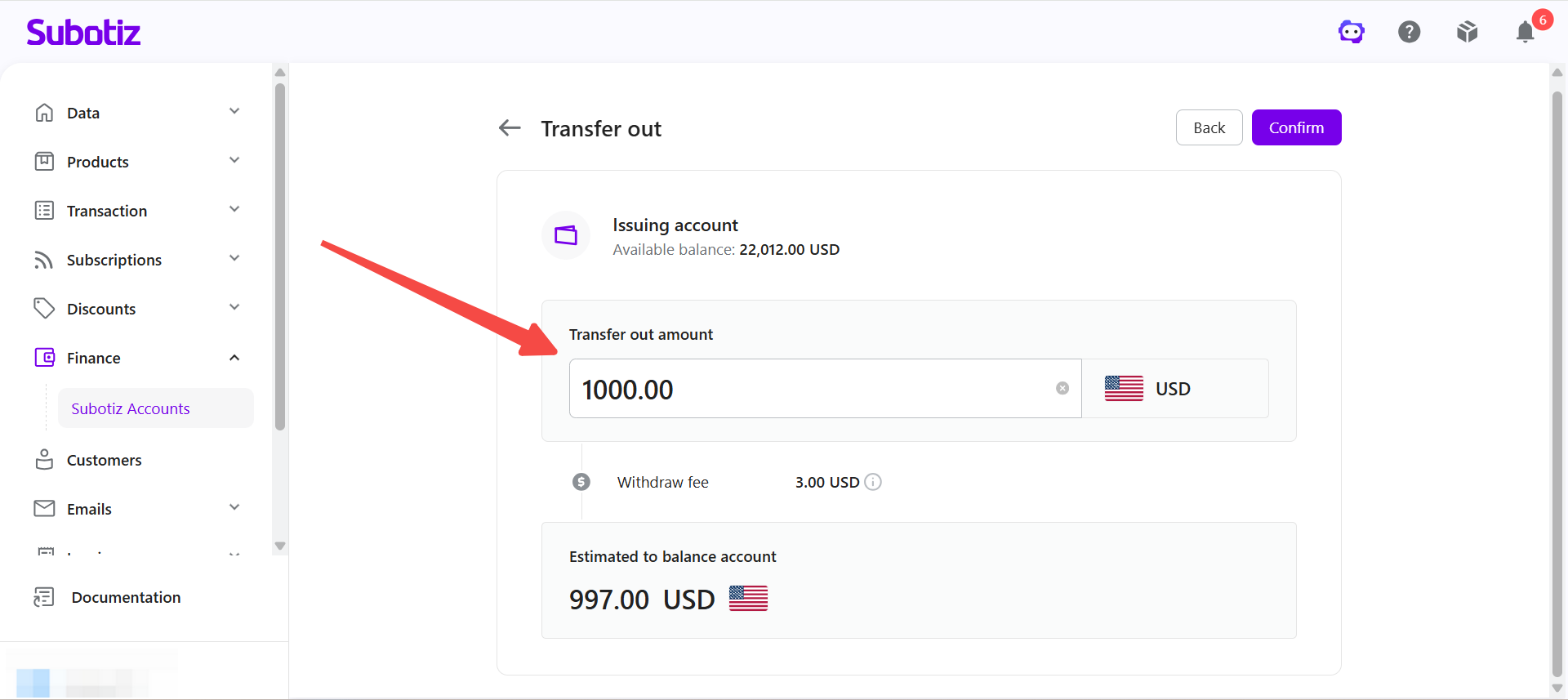
- Transfer funds out: Go to Settings > Transfer Out, enter the amount to transfer, and confirm. The system transfers the funds from the Issuing Account back to the corresponding Global Account. Before submission, the page displays the estimated amount to be received and any applicable fees.
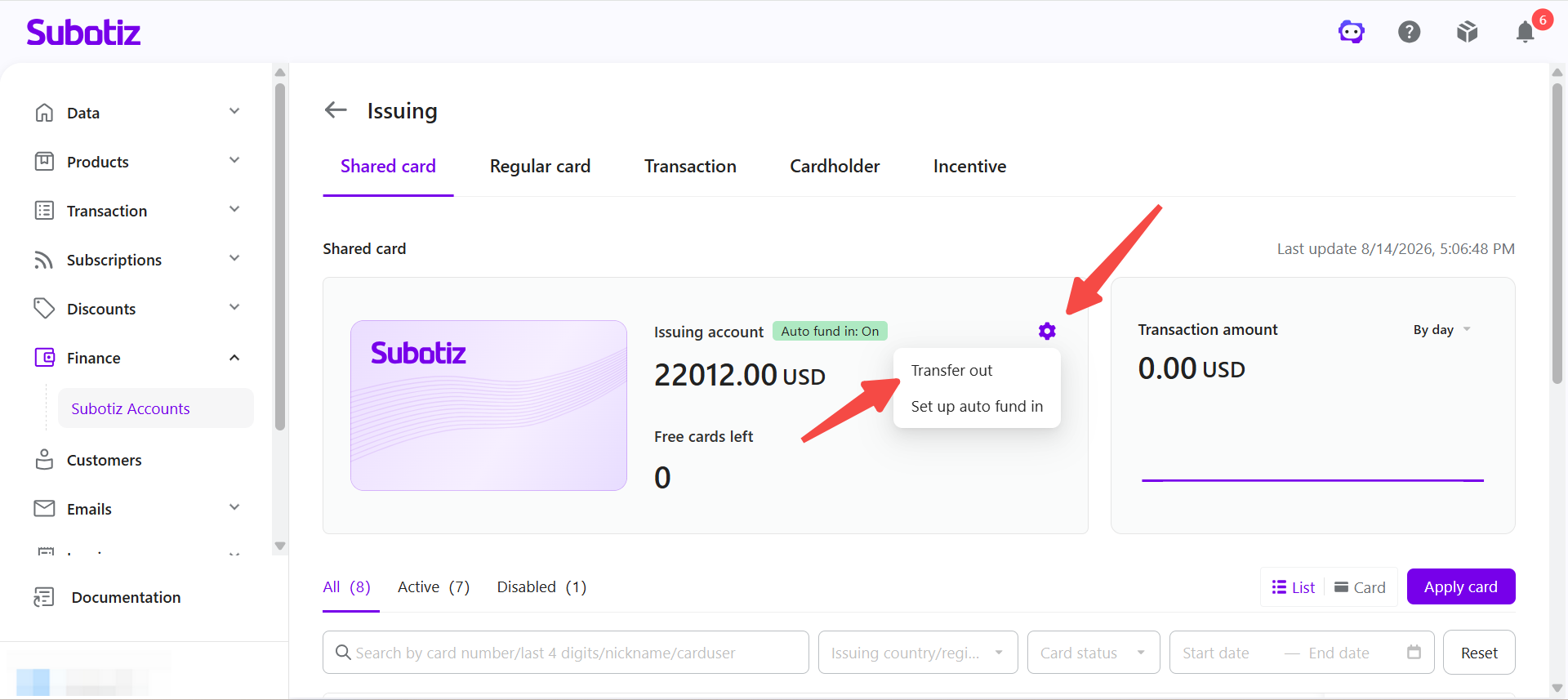
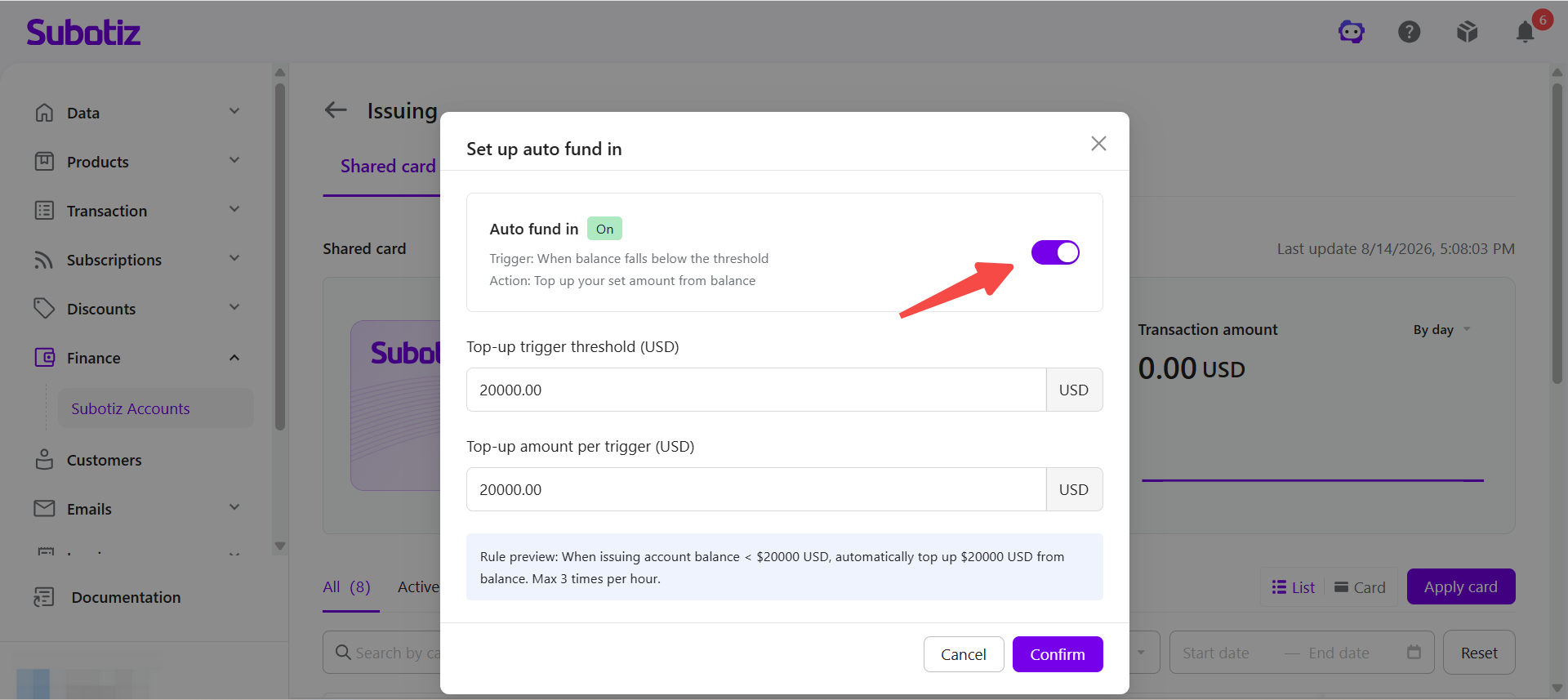
- Set up Auto Fund: Go to Settings > Set Up Auto Fund In, then set the balance threshold and top-up amount. Once enabled, the system automatically adds funds from the selected Global Account when the Issuing Account balance falls below the specified threshold. Auto Fund is suitable for ongoing payments or recurring charges and helps reduce the risk of Shared Card transactions failing due to insufficient funds.
Managing Shared Cards
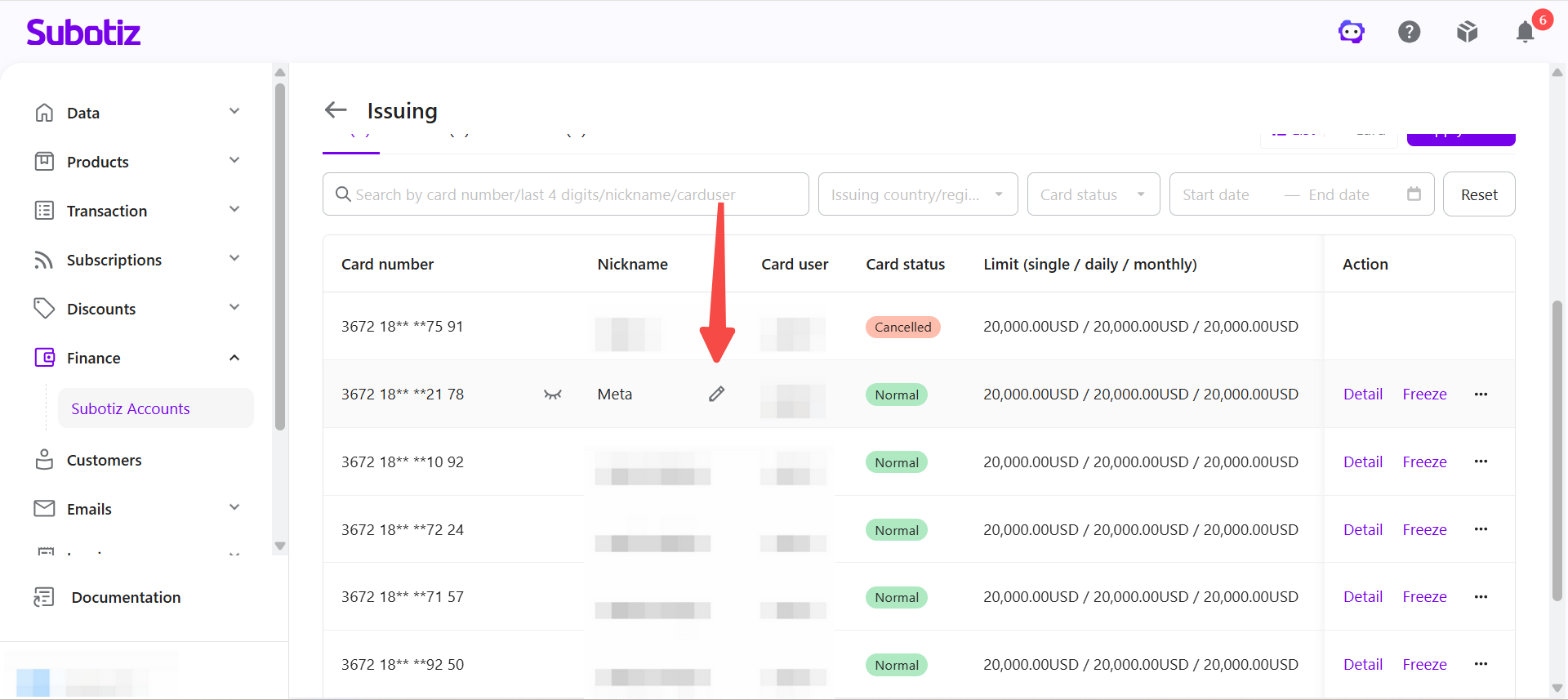
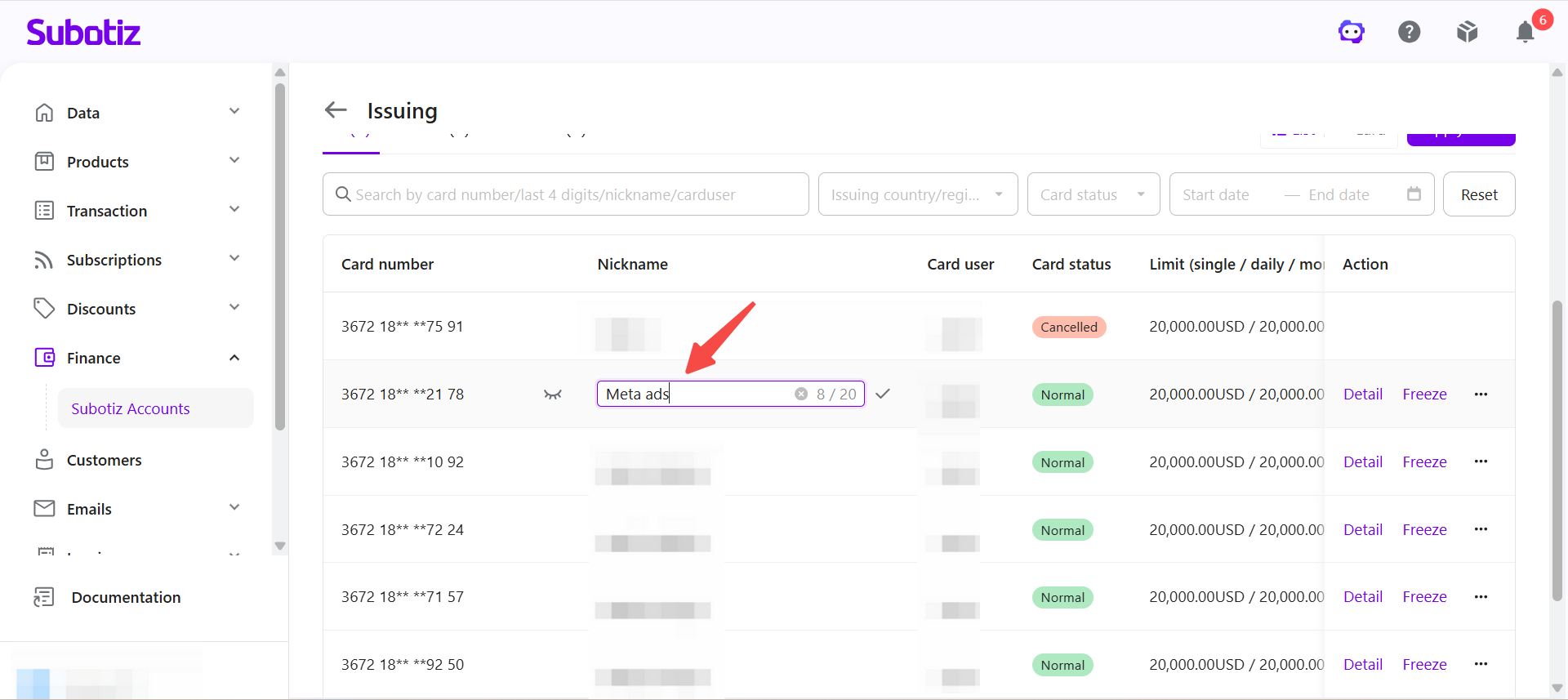
- Update a card nickname: Click the edit icon next to the nickname, enter a new card nickname, and save the changes.
- Freeze a Shared Card: Click Freeze and review the card information to confirm. While frozen, the Shared Card cannot be used for online payments. The card can be used again after it is unfrozen.
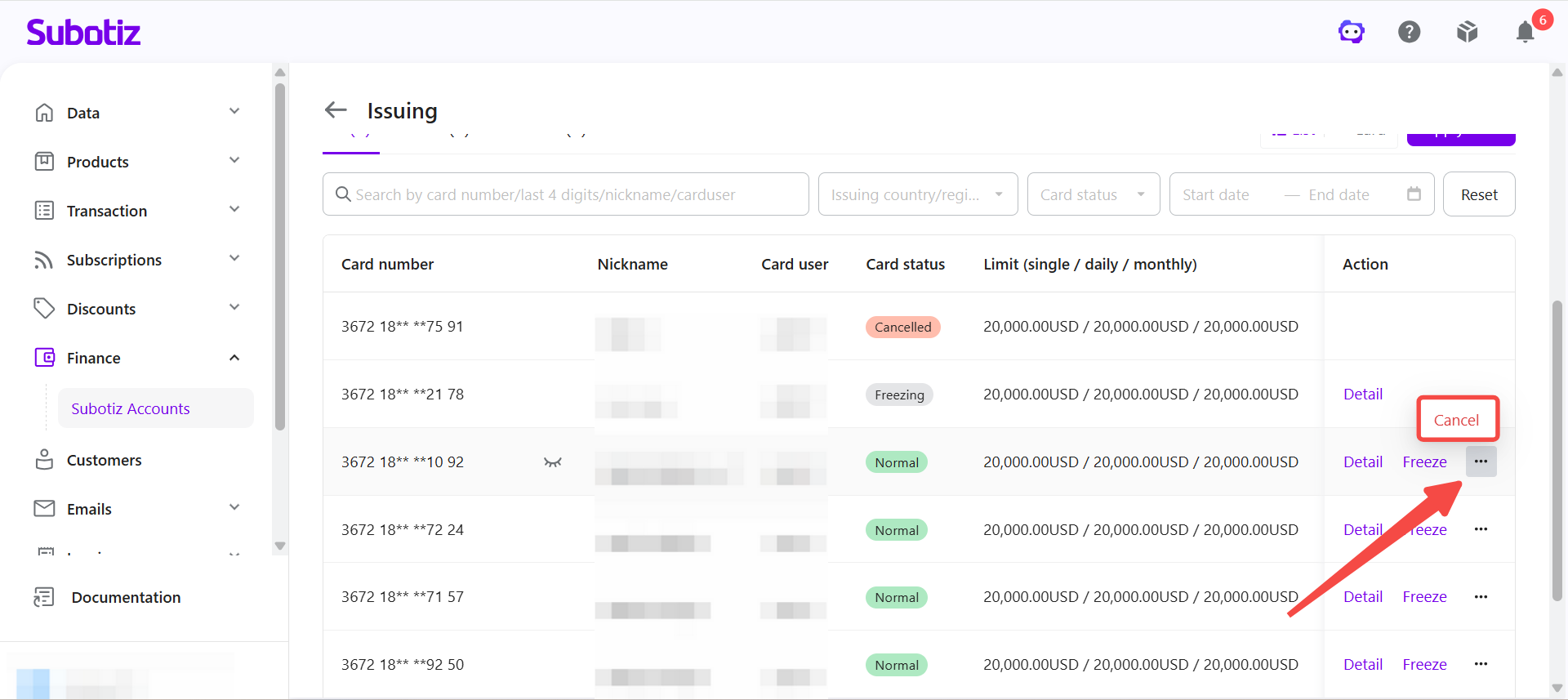
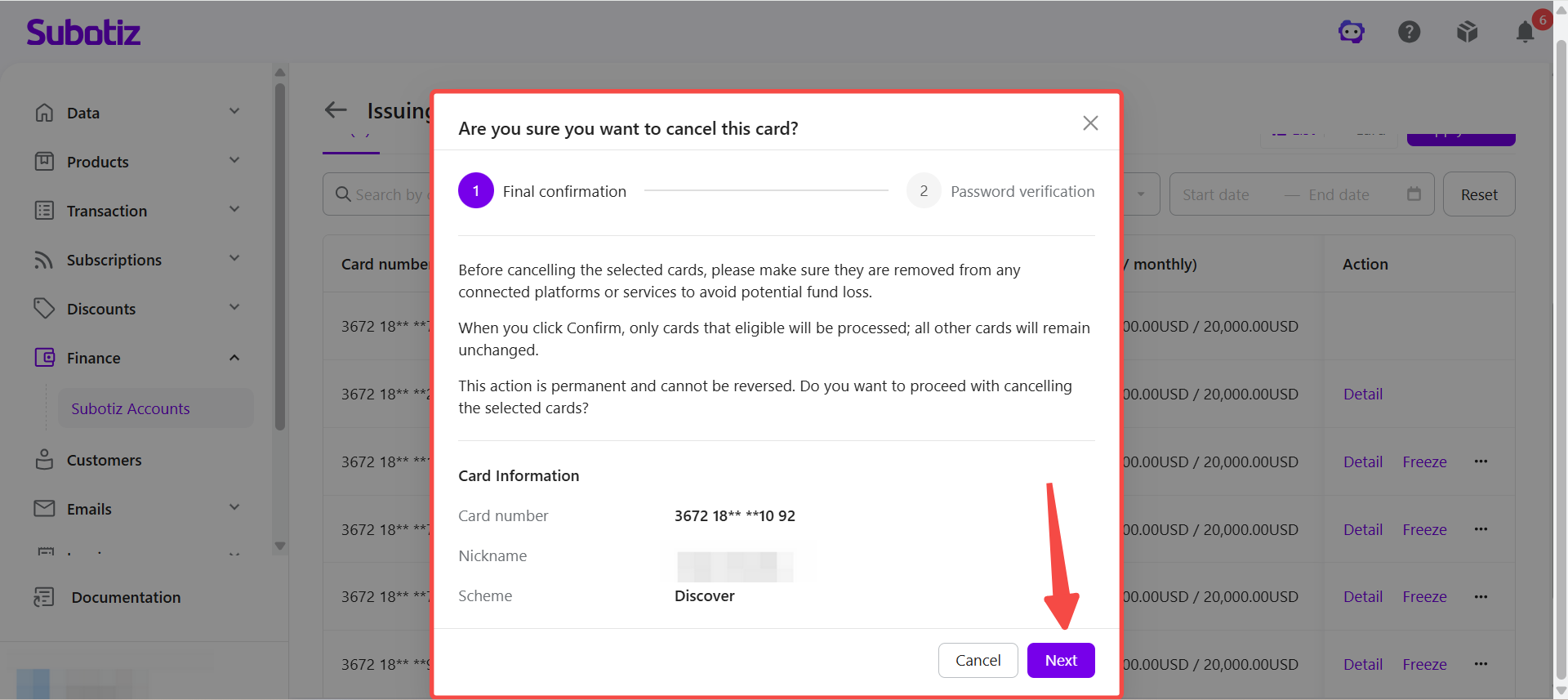
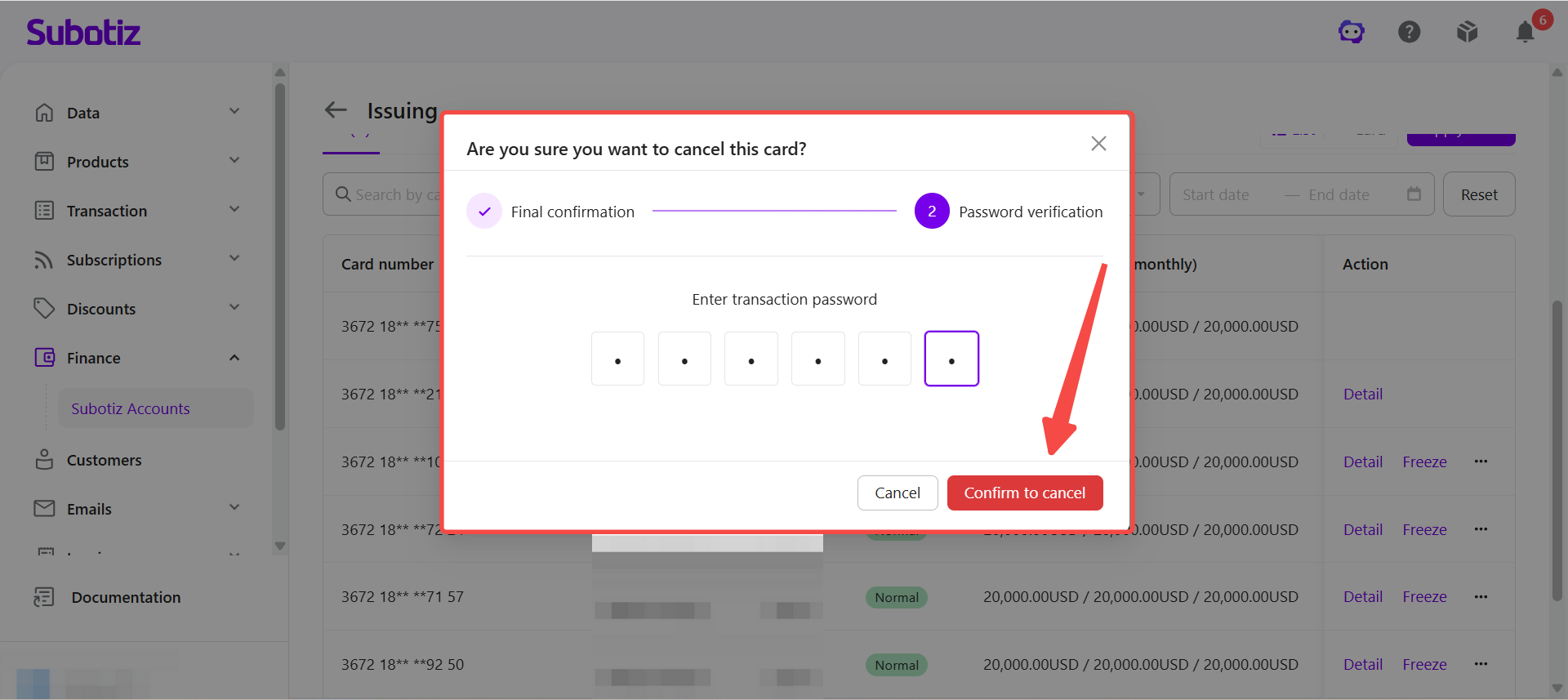
- Cancel a Shared Card: Go to More > Cancel, review the card information and notices, then enter the transaction password to confirm the cancellation. A cancelled card cannot be restored or used for online payments. Before cancelling the card, make sure it has been removed from all advertising platforms, subscription services, and other online payment scenarios.
Best Practices
- Maintain a sufficient Issuing Account balance: Keep sufficient funds in the Issuing Account to cover Shared Card transactions and help prevent payment failures due to insufficient funds.
- Keep the notification email up to date: Make sure the 3DS verification email address can receive messages so verification codes are delivered successfully.
- Set appropriate spending limits: Set per-transaction, daily, and monthly limits based on the intended use of each card to maintain better control over spending.
- Review the Issuing Account balance regularly: All Shared Cards draw funds from the same Issuing Account, so regularly review the account balance and overall fund usage.
- Remove the card from linked services before cancellation: Make sure the Shared Card has been removed from all advertising platforms, subscription services, and other online payment scenarios before cancelling it to prevent future payment attempts.
The Shared Cards page provides tools to search, filter, set spending limits, manage funds, and manage Shared Cards in one place. By using the Issuing Account as a shared funding source, merchants can manage card usage, online payments, shared funds, and budgets more efficiently.